
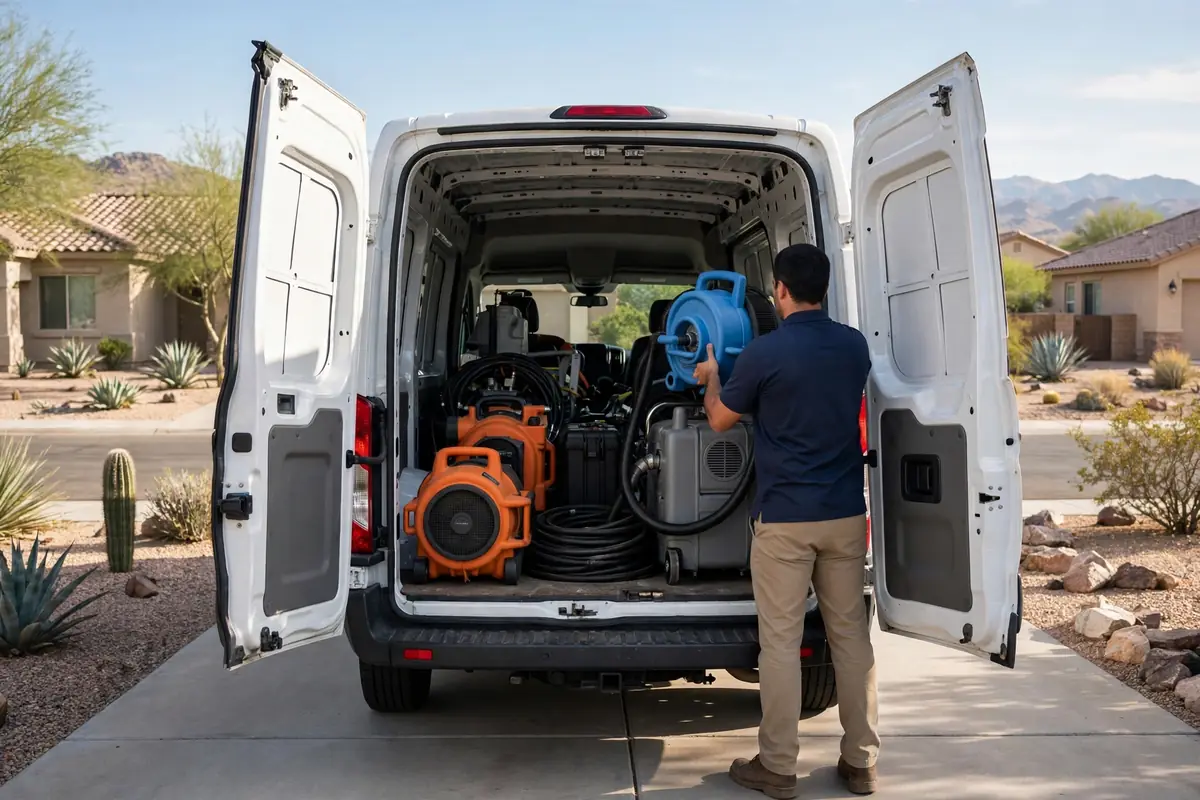
AC Leak Water Damage in Chandler, AZ
In Chandler, the air conditioner is the hardest working appliance in the house, and it is also one of the most common sources of water damage. An AC system does two jobs at once: it cools the air and it pulls moisture out of the air.
In Chandler, the air conditioner is the hardest working appliance in the house, and it is also one of the most common sources of water damage. An AC system does two jobs at once: it cools the air and it pulls moisture out of the air. That moisture has to go somewhere, and when the drain path fails, the water ends up in your attic, your ceiling, your walls, and your floors. RestoreNov provides AC leak water damage restoration across Chandler, AZ. Call (480) 701-8249 for emergency help.
Direct answer: An AC leak usually comes from a clogged condensate drain line, an overflowing drip pan, a failed float switch, a cracked or rusted drain pan, a disconnected drain pipe, or a frozen evaporator coil that melts and overflows. In Chandler homes, where the air handler often sits in the attic, an overflow sends water down through insulation, ceiling drywall, and flooring below. Warning signs include a ceiling stain, a musty smell from vents, water near the indoor unit, and an AC that shuts itself off. Stop the system if it is safe to do so, call an HVAC technician to fix the source, and call a restoration team to extract water, dry the structure, and repair the damage.
This page goes deep on how AC condensate systems work, why they fail in Chandler homes, how to spot a leak early, what restoration after an AC leak involves, and how to prevent the next one. This is the Chandler signature page for AC-related water damage, because no other common cause is this local, this preventable, and this destructive when it goes unnoticed.
What Happens When You Call
When you call about an AC leak, here is the sequence that follows. It runs from the first phone conversation through the final check that the area is dry and repaired.
- Step 1: Call and assessment You describe the signs, such as a ceiling stain, water near the indoor unit, or an AC that shut itself off. We ask where the water is showing, whether the system is still running, and whether any electrical fixtures are affected, so the visit starts with a clear picture.
- Step 2: Find the AC leak and dry The crew locates the leak area, maps moisture in the attic, ceiling, walls, and floors, extracts standing water, and sets up drying for the wet structure. The HVAC technician handles the repair to the AC unit itself.
- Step 3: Repair and verify Once moisture readings confirm the structure is dry, damaged insulation and drywall are replaced, finishes are matched, and a final check confirms the area is dry and the repair is complete.

How an Air Conditioner Makes Water
Understanding the leak starts with understanding where AC water comes from. It is not a plumbing leak. It is condensation, and it happens every hour your system runs.
Warm indoor air carries water vapor. When that air blows across the cold evaporator coil inside your air handler, the air cools and the vapor condenses into liquid water on the coil surface, the same way dew forms on a cold drink on a summer day. That water drips off the coil into a drain pan below it, then flows out through the condensate drain line, usually a white PVC pipe, to an exterior discharge point near the outdoor unit or through a wall.
In Chandler, where air conditioners run for much of the year and often run for long daily cycles in summer, the volume adds up. A residential system can produce several gallons of condensate per day during heavy cooling, and far more over a week. That is a steady, quiet flow of water through a small pipe, and the system depends on that pipe staying clear every single day it runs.
Two features of Chandler homes make this risk bigger than in many other cities. First, the air handler often sits in the attic, above living space, so any overflow falls downward through insulation and ceiling drywall. Second, the cooling season is long, so the drain line carries water for more months of the year, giving algae and debris more time to build up. An AC leak in Chandler is not a rare accident. It is a maintenance failure waiting for a hot month.
The Condensate Drain System, Part by Part
A residential condensate system has several parts, and a failure in any one of them can cause water damage. Knowing the parts helps you understand what the technician is describing and what to check.
Evaporator coil
The evaporator coil is the cold surface where condensation forms. A dirty coil restricts airflow, reduces cooling, and can freeze over. When a frozen coil melts, it releases a large volume of water at once, which can overwhelm the drain pan. Regular filter changes and coil cleaning keep the coil working properly.
Primary drain pan
The primary drain pan sits under the evaporator coil inside the air handler and catches the condensate. It connects to the primary drain line. If the pan cracks, rusts through, or shifts out of position, water can miss the drain and leak into the unit housing, the attic floor, or the ceiling below.
Primary condensate drain line
The primary drain line carries water from the pan to the outside. It is usually three-quarter inch PVC with a P-trap and a cleanout tee near the air handler. The P-trap holds a small amount of water that seals the line so conditioned air does not blow out through the drain and unconditioned air does not get sucked in. The cleanout tee is a capped vertical pipe where a technician can flush or vacuum the line. This is the line that clogs most often.
Secondary or auxiliary drain pan
Because drain lines do clog, building practice calls for a second layer of protection when the air handler sits above a finished ceiling. A secondary drain pan, often metal or plastic, sits under the entire air handler and catches overflow if the primary pan or line fails. The secondary pan should have its own separate drain line that discharges in a conspicuous place, such as over a window, so that dripping water is noticed. If you ever see water dripping from a pipe over a window when it has not rained, that is often the secondary drain telling you the primary line has failed.
Float switch (overflow safety switch)
The float switch is an electronic safety device that sits in the secondary pan or in the drain line. When water rises too high, the float lifts and shuts the air conditioner off so it stops producing more condensate. A tripped float switch can feel like a breakdown, because the system stops cooling on a hot day, but it is the switch doing its job. Never bypass a float switch to keep the system running. Bypassing the switch turns a small drain problem into a flooded ceiling.
Drain line termination
The drain line ends at an exterior discharge point, often a PVC stub near the outdoor condenser unit or protruding from an exterior wall. On a humid day when the system has been running for hours, you should see a steady drip at the termination. No drip at all on a day when the system has been running hard can mean the line is clogged and water is going somewhere else.
Why Condensate Drain Lines Clog in Chandler
Condensate drain clogs are not caused by one event. They build up slowly, and Chandler conditions speed the process.
Algae and biofilm
The inside of a condensate drain is dark, damp, and warm, which is ideal for algae, mold, and bacterial slime, collectively called biofilm. Biofilm grows on the pipe walls, narrows the opening, and eventually blocks flow. Algae growth is faster in warm climates and in systems that run long daily cycles, which describes Chandler for much of the year.
Dust and debris
Chandler dust gets everywhere, including into air handlers and drain pans. Dust that settles in the drain pan washes into the line and combines with biofilm to form sludge. Haboob dust storms and monsoon-season dust can add to the load, especially in homes where filters are changed infrequently or attic access lets dust into the system.
Rust, scale, and mineral deposits
Chandler water is hard, and mineral deposits can accumulate in drain pans and lines over time. Metal pans can rust, and rust flakes can break off and lodge in the line. Older systems with metal pans are more prone to this type of clog than newer systems with plastic pans.
Improper slope, sagging, and disconnected joints
A condensate line needs a steady downward slope to the termination. A line that sags, has a low spot, or was installed without enough slope will hold standing water, which grows biofilm faster and drains slowly. Joints that were never glued, or that loosened over time, can leak at the connection or separate entirely, dumping condensate into the attic or a wall cavity.
Frozen evaporator coil
A frozen coil is a separate failure that produces a sudden overflow. Common causes include a dirty air filter, restricted airflow, low refrigerant, or a failing blower. Ice builds up on the coil, blocks airflow, and then melts when the system shuts off or the ice load becomes too heavy. The meltwater can arrive faster than the drain can carry it, overflowing the pan. If you see ice on refrigerant lines or on the indoor unit, turn the cooling off, run the fan if the system allows, and call an HVAC technician. Never chip ice off a coil with a sharp tool.
Attic Air Handlers: Why Chandler Ceiling Damage Starts Overhead
The attic air handler is the defining feature of AC water damage in Chandler. In many local homes, the air handler sits in the attic above a hallway, bedroom, or living room ceiling. That placement saves living space and reduces noise, but it puts a water-producing appliance directly above finished drywall.
When an attic unit overflows, the sequence is predictable. Water spills from the primary pan or the secondary pan onto the attic floor, which is often just ceiling drywall with insulation on top. Insulation absorbs water and holds it against the drywall. The drywall softens, sags, and eventually stains, bubbles, or collapses. Water then reaches flooring, furniture, and belongings below. Because attics are rarely visited, the leak can run for days before anyone notices, especially when the overflow is slow or when the affected room is a guest bedroom or office that is not used every day.
Attic heat makes the problem worse in two ways. First, warm attic air accelerates mold growth in wet insulation and drywall. Second, attic temperatures in a Chandler summer are extreme, so a homeowner who does go into the attic to check may not stay long enough to inspect thoroughly. That is why the warning signs below matter more than attic inspections for most homeowners. If you see the signs, act on them without waiting to confirm the attic condition yourself.
A related attic risk is duct condensation. Ducts that run through a hot attic can sweat when cold conditioned air meets warm, humid attic air, especially where duct insulation is thin, damaged, or missing. Condensation on ducts can drip onto insulation and ceiling drywall, producing stains that look like a roof leak or a condensate overflow. A restoration assessment should distinguish duct condensation from a drain failure, because the fix is different, even though the ceiling repair may be similar.
Warning Signs of an AC Leak
AC leaks give warnings before they cause major damage, but the warnings are easy to miss or misread. Learn these signs and act on them the same day.
- A ceiling stain below an attic unit. A yellow, brown, or expanding stain on the ceiling under or near the air handler is the classic sign. A stain that appears when it has not rained points to the AC, not the roof.
- An active drip or bulging ceiling. A ceiling that bulges, bubbles, or drips is saturated and may be close to failure. Do not poke it to drain it without a bucket and a plan, and keep people out from under it.
- Water pooling near the indoor unit. Water on the floor of a closet, garage, or utility area near the air handler means the pan or line is leaking at the unit.
- A full or overflowing drain pan. If you can safely see the secondary pan and it holds standing water, the primary drain has failed.
- A musty smell from vents. A musty or earthy odor when the system runs can mean mold or biofilm in the drain pan, the coil, or wet insulation and drywall downstream of a leak.
- The AC shuts itself off. A system that stops cooling, especially with a blank thermostat, may have a tripped float switch. The switch is protecting you from an overflow. Do not bypass it.
- No drip at the exterior termination. On a day when the system has been running for hours, the exterior drain should drip. A dry termination on a humid, high-run day is a warning that water is not leaving through the drain.
- Water dripping from the secondary drain. Water dripping from a pipe over a window or in another conspicuous spot means the secondary drain is carrying water, which means the primary line has failed.
- Higher indoor humidity. If the house feels sticky or humid even though the AC runs, the coil or drainage may not be removing moisture properly.
If you notice several of these signs together, treat it as an active leak. Stop the system if it is safe to do so, call an HVAC technician to fix the source, and call a restoration team to assess the water damage. Do not wait for the next cooling cycle to see if it gets worse.
What to Do When You Find an AC Leak
The first hour after discovery sets the size of the job. The goal is to stop more water, protect people and property, and get professionals involved quickly.
- Turn off the AC if it is safe to do so. Shut the system off at the thermostat. If water is near electrical components, shut off power to the unit at the breaker and do not touch wet electrical equipment.
- Protect the area below. Move furniture, electronics, rugs, and belongings out from under the leak. Place buckets or towels under an active drip, and cover furniture that cannot be moved with plastic.
- Do not ignore a sagging ceiling. A ceiling that sags or bulges is holding water. Keep people and pets out from under it, and do not press on it. A controlled drain by a professional is safer than a collapse.
- Call an HVAC technician to fix the source. The drain line, pan, float switch, or coil problem is HVAC work. Restoration dries and repairs the structure, but the source must be fixed first or the leak will return.
- Call a restoration team for water damage. Extraction, moisture mapping, drying, and repair are restoration work. The sooner drying starts, the smaller the demolition and the lower the mold risk.
- Photograph everything. Take wide shots of each affected room and close shots of the stain, the drip, the unit, and any damaged contents. These photos support an insurance claim and document the condition before drying.
- Do not run the AC until the source is fixed. Running a system with a clogged drain produces more condensate and more water damage. Wait for the HVAC technician to clear the line and confirm the system drains properly.
Homeowners sometimes try to clear a clogged drain themselves with a wet vacuum at the exterior termination or a flush at the cleanout tee. Those methods can help as a stopgap, but they are not a substitute for a proper HVAC inspection, especially if the pan is cracked, the float switch has tripped, or ceiling damage has already appeared. If you are unsure, leave the drain work to the technician and focus on protecting the rooms below.
Restoration After an AC Leak: What the Work Involves
AC leak restoration is different from a burst pipe cleanup in one important way: the water often enters from above, so the damage runs vertically through insulation, ceiling, walls, and floors. The restoration plan has to follow that path.
Inspection and moisture mapping
Technicians inspect the air handler area, the attic, the ceiling below, adjacent walls, and the flooring below the leak. Moisture meters and thermal imaging cameras find water in insulation, wall cavities, and ceiling drywall that eyes cannot see. The moisture map sets the drying plan and the scope of removal. An AC leak that looks like a small ceiling stain often involves a much larger area of wet insulation above the ceiling.
Water extraction
Standing water on floors is extracted with truck-mounted or portable extractors. Water trapped in ceiling assemblies and insulation cannot be extracted the same way, so the drying plan focuses on airflow, dehumidification, and controlled removal of saturated materials.
Removal of saturated insulation and drywall
Wet attic insulation loses its insulating value and becomes a mold site. Saturated insulation usually needs removal. Ceiling drywall that is sagging, soft, or visibly mold-affected usually needs removal too, often as a controlled cut that opens the ceiling cavity for drying. Drywall that is only lightly damp may be dried in place with airflow, but that call is made from moisture readings, not from appearance.
Structural drying
Commercial air movers and dehumidifiers dry the ceiling cavity, framing, wall cavities, and flooring. Drying an attic-to-ceiling assembly can take longer than drying a floor-level spill, because insulation, framing, and multiple layers of material all hold moisture. Technicians take daily moisture readings until materials reach their dry standard, and they keep written drying logs.
Cleaning and sanitizing
Affected surfaces are cleaned and treated with antimicrobial products to discourage microbial growth. This step matters most where water sat for more than a day, where insulation was saturated, or where mold growth is suspected. Air handler surfaces and drain pans are HVAC territory, and the HVAC technician should clean and service those components as part of the source repair.
Repair and rebuild
Once the structure is verified dry, repairs begin: new insulation, new ceiling drywall, tape and texture to match, paint, and any flooring or trim repair below. Texture matching on ceilings matters, because a patch that does not match the surrounding ceiling is visible in every room. For the full rebuild sequence, see our page on water damage repair and reconstruction in Chandler.
Documentation for insurance
Photos, moisture readings, drying logs, and a written scope document the loss for your carrier and adjuster. AC leak claims often turn on whether the damage was sudden and accidental versus gradual, so documentation that shows the failed component, the date of discovery, and the speed of response carries real weight. For the full claims discussion, see our insurance claim help page.
The HVAC Technician Versus the Restoration Team: Who Does What
Confusion about roles is common after an AC leak, and it can delay both the fix and the drying. The division is simple.
The HVAC technician diagnoses and fixes the source: clears the drain line, repairs or replaces the drain pan, tests or replaces the float switch, fixes the coil or refrigerant issue, and confirms the system drains properly. HVAC work requires the right tools, parts, and knowledge of the system, and it should not be improvised.
The restoration team handles the water damage: extraction, moisture mapping, drying, removal of saturated materials, cleaning, mold prevention, documentation, and repair of the structure. Restoration work requires drying equipment, moisture meters, and knowledge of building materials.
Both roles matter, and neither replaces the other. A fixed drain line does not dry a saturated ceiling. A dried ceiling does not fix a clogged drain. Schedule both, and let each team do its own work.
Prevention and Maintenance: Keeping the Drain Clear
An AC condensate leak is one of the most preventable water losses in a Chandler home. A small maintenance routine protects ceilings, insulation, and floors.
- Change air filters regularly. A clean filter keeps airflow strong, keeps the coil clean, and reduces freeze risk. Check filters monthly during cooling season and replace them as needed.
- Flush the condensate line on a schedule. Many HVAC technicians recommend flushing the drain line during routine maintenance, and some homeowners flush the cleanout with warm water and a small amount of vinegar on a monthly or seasonal schedule. Ask your technician what is appropriate for your system and whether vinegar is suitable for your line and pan materials.
- Keep the cleanout cap in place. The cleanout cap keeps the trap sealed and keeps conditioned air from escaping. Replace the cap after any flush or inspection.
- Schedule professional HVAC maintenance. A technician can inspect the coil, pans, drain line, float switch, and refrigerant levels, and can catch a rusting pan or a sluggish drain before it overflows.
- Check the exterior termination. On a day when the system runs hard, confirm that the drain drips outside. A dry termination is an early warning.
- Check the secondary pan. If you can safely access the secondary pan, look for standing water, rust, or debris. Standing water in the secondary pan means the primary drain has already failed.
- Test the float switch. Ask your HVAC technician to test the float switch during maintenance visits, so you know it will shut the system off when it needs to.
- Watch the ceilings below attic units. Inspect ceilings under attic air handlers after the start of cooling season and after any AC service. A faint stain caught early is a small repair. The same stain caught a month later is a ceiling rebuild.
- Know the age and condition of your system. Older systems with metal pans, aging drain lines, and worn components deserve closer attention. When a system is replaced, confirm that the new installation includes a secondary pan and a float switch if the unit sits above finished space.
AC Leaks Versus Roof Leaks: Telling Them Apart
A ceiling stain in Chandler can come from an AC leak, a roof leak, or a plumbing leak, and the fix is different for each. A few clues help separate them.
- Timing. An AC stain appears or grows when the AC runs hard, including during dry weather. A roof leak stain appears or grows after rain, especially wind-driven rain.
- Location. An AC stain sits below or near the air handler or the drain line path. A roof leak stain sits below a roof valley, flashing, vent, or damaged shingle area.
- Water behavior. AC overflow is often a slow, steady leak that worsens over days. A roof leak may appear suddenly during a storm and then stop.
- Other signs. Musty vent odor, a tripped float switch, or a dry exterior drain point toward the AC. Missing shingles, clogged gutters, or roof debris point toward the roof.
If the cause is unclear, a restoration assessment with moisture mapping can narrow it down, and an HVAC technician and a roofer can each check their own system. Do not assume a stain is a roof leak and wait for the next storm to confirm it. AC leaks cause damage in dry weather, and waiting lets the ceiling assembly stay wet.
Areas We Serve in Chandler and the East Valley
We provide ac leak water damage across Chandler and the surrounding East Valley. Our address is 1651-1683 E Germann Rd, Chandler, AZ 85286, and our crews come to you.
We also serve homes in Andersen Springs, Pecos Ranch, Clemente Ranch, Fox Crossing, Cooper Commons, and Dobson Place.
Serving Chandler and the East Valley: Downtown Chandler, Ocotillo, Fulton Ranch, Sun Groves, Tumbleweed Park, Gilbert, Mesa, Tempe, Queen Creek, Sun Lakes, Ahwatukee, Higley.
Tools & Technology We Use
An AC leak hides water in places eyes cannot reach, so the tools on this job are chosen to find hidden moisture, remove standing water, and dry the ceiling assembly from the top down.
- Moisture meters. Pin and pinless meters read moisture inside ceiling drywall, wall cavities, and framing, so the wet area is mapped instead of guessed.
- Thermal imaging. An infrared camera shows temperature differences that point to wet insulation and damp ceiling areas, which helps place drying equipment and plan controlled removal.
- Extractors. Portable extractors pull standing water from floors and from accessible wet surfaces, so drying starts from a lower moisture baseline.
- Air movers. High-volume fans push air across wet ceilings, walls, and floors, speeding evaporation from surfaces and cavities.
- Dehumidifiers. Dehumidifiers pull the evaporated moisture out of the indoor air, which keeps drying moving and keeps humidity from settling into dry materials.
- Drain-line clearing tools. Wet vacuums and hand tools clear debris and standing water from the drain pan area during cleanup, so the pan zone is clean and open for the HVAC technician's repair.
Frequently Asked Questions
The most common reasons are a clogged condensate drain line, an overflowing or damaged drain pan, a failed float switch, a disconnected drain pipe, or a frozen evaporator coil that melts and overflows. Algae, dust, debris, and mineral buildup cause most clogs, and Chandler systems are prone to clogs because they run for much of the year.
A tripped float switch is a likely reason. The switch shuts the system off when water rises too high in the drain pan or line, to stop more condensate from forming. The shutdown is a safety response, not a malfunction. Do not bypass the switch. Find and fix the clog or pan problem.
Yes. Wet insulation, ceiling drywall, and wall cavities can support mold growth if they stay damp. Published industry guidance commonly cites 24 to 48 hours as the window after which mold growth becomes a growing risk in wet materials, and warm attic conditions can push toward the fast end of that window. Fast drying is the main defense.
It depends on the cause and the policy. A sudden and accidental failure, such as a drain line that clogs and overflows, is often treated differently from a gradual leak caused by deferred maintenance. See our insurance claim help page for the full discussion, and remember that page is general information only, not legal or financial advice.
Call both. The HVAC technician fixes the source, and the restoration team dries and repairs the structure. If you must choose one first, stop the water by turning off the system, then call the HVAC technician to fix the source and the restoration team to assess the damage.
Drying time depends on how much insulation and drywall got wet, whether the ceiling must be opened, and how long the leak ran before discovery. Surface drying may take a day or two, but full drying of a ceiling assembly often takes 3 to 5 days or longer. Moisture readings determine when drying is complete.
Regular filter changes, drain line maintenance, professional HVAC service, and checks of the exterior termination and secondary pan reduce the risk substantially. No maintenance routine eliminates the risk entirely, but most AC leaks are preventable with routine care.
Yes. A stain means water already reached the ceiling assembly, and the insulation above may still be wet even if the drip has stopped. Moisture mapping can show whether the assembly is still damp and whether drying or removal is needed.
Call Now for AC Leak Water Damage in Chandler
Water damage gets worse every hour it sits. Call RestoreNov now at (480) 701-8249 for live 24/7 ac leak water damage across Chandler and the East Valley. Fast response, moisture-verified drying, and insurance-ready documentation, all handled as one job. If you are standing in water right now, shut off the water source if it is safe, stay clear of electrical hazards, and call.
Request a Call Back
Tell us what happened and where the water is. For emergencies, calling is fastest - a live person answers 24 hours a day.
Prefer to talk now?
Call (480) 701-8249 any time, day or night.
We serve Chandler and the East Valley: Downtown Chandler, Ocotillo, Fulton Ranch, Sun Groves, Tumbleweed Park, South Chandler, Gilbert, Mesa, Tempe, Queen Creek, Sun Lakes, Ahwatukee, and Higley.
Our address:
1651-1683 E Germann Rd, Chandler, AZ 85286
Send a Message
For immediate help, call (480) 701-8249. A live person answers 24 hours a day.
Online messaging is not connected yet. For immediate help, call (480) 701-8249.