
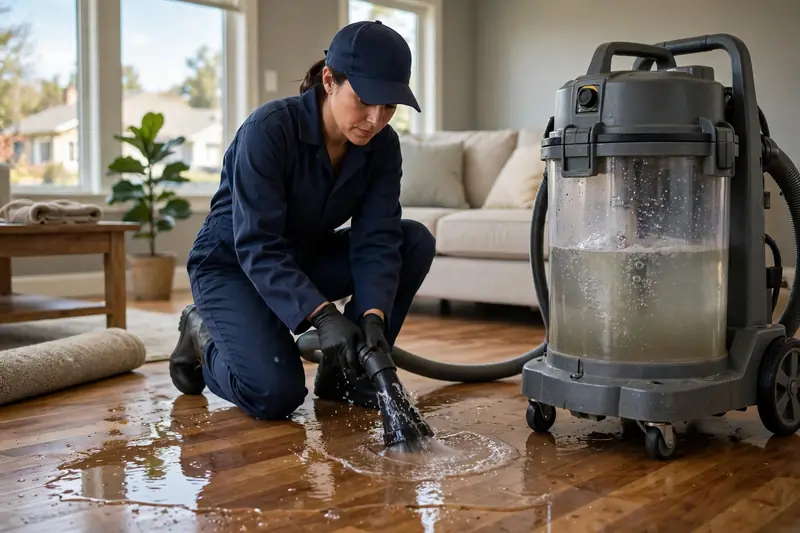
The short answer: A slab leak is a water leak in the pipes buried under your home's concrete slab foundation, and the signs are a warm spot on the floor, the sound of running water when nothing is on, an unexplained jump in your water bill, damp flooring or baseboards, low water pressure, a musty smell, and new cracks in walls, tile, or the foundation. Any one of these signs deserves attention. Two or more together mean you should act quickly, because a slab leak keeps running around the clock, erodes soil under the slab, and soaks flooring and wall bases from below. If you notice these signs in your Chandler home, call a plumber for leak detection first, then call RestoreNov at (480) 701-8249 to assess the water damage the leak has already caused.
What a Slab Leak Actually Is
Most Chandler homes are built on a concrete slab foundation. The water supply pipes, and sometimes drain lines, run through or beneath that slab to reach kitchens, bathrooms, laundry rooms, and the water heater. A slab leak is a leak in one of those buried lines. The water has nowhere to go except into the soil under the slab, upward through the concrete, and outward into flooring, wall bases, and the ground around the foundation.
Slab leaks are unusually destructive for their size. A pinhole leak in a copper line under a slab can release a steady stream of water twenty four hours a day, seven days a week. Because the leak is buried, it can run for weeks or months before anyone notices. By the time a symptom appears at the surface, the soil below may already be saturated, the slab may already be shifting, and the flooring above may already be damaged.
There are two main types. A hot water line slab leak pushes warm water upward, which is why warm spots on the floor are such a classic sign. A cold water line leak produces no heat, which makes it harder to detect and easy to miss for longer. Both cause the same categories of damage: soil erosion, foundation movement, flooring damage, moisture intrusion, and mold conditions. Cold water leaks often cause more total damage precisely because they hide longer.
Slab leaks are not a plumbing curiosity. They are one of the most expensive residential water problems in Arizona, because they combine three repair jobs at once: the plumbing repair, the foundation and soil consequences, and the water damage restoration of everything the leak soaked from below.
Why Chandler Homes Are Vulnerable
Chandler's conditions create a specific set of slab leak risks that homeowners in other climates do not face in the same way.
Expansive and shifting soil. The soils of the East Valley expand when wet and shrink when dry. That movement stresses buried pipes year after year. A pipe that was installed with a slight bend or resting against rebar or aggregate can rub, flex, and eventually fail at the stress point. Monsoon season adds a cycle of soaking and drying that repeats the stress.
Hard water and corrosion. Chandler area water is very hard, carrying high levels of calcium and magnesium. Hard water accelerates scale buildup inside pipes and contributes to corrosion in copper lines, especially at joints and elbows. Corrosion thins the pipe wall from the inside until a pinhole forms. Our article on hard water pipe corrosion in Arizona homes covers the chemistry and the warning signs in detail.
Copper plumbing in older homes. Many Chandler homes built before the widespread adoption of PEX tubing have copper supply lines under the slab. Copper is a good material, but it is vulnerable to pitting corrosion from water chemistry, to electrolysis where dissimilar metals meet, and to abrasion where the pipe contacts concrete. Homes from the 1980s, 1990s, and early 2000s are now reaching the age where copper slab lines begin to fail.
Long cooling seasons and hot water demand. Hot water lines under slabs carry an extra burden. Constant heating and cooling cycles expand and contract the pipe, and hot water accelerates corrosion chemistry. That is why hot water line slab leaks are so common: the hot side fails first in many homes.
High water pressure. Some Chandler neighborhoods have municipal water pressure at the high end of the residential range. Sustained high pressure stresses every joint and fitting in the system, including the buried ones you cannot inspect. A pressure regulator that has failed silently can push the whole system harder for years.
None of this means every Chandler home will get a slab leak. It means the risk is real, the conditions favor it, and knowing the signs is not paranoia. It is maintenance.
The 10 Signs, Explained One by One
1. A warm spot on the floor
A warm or hot spot on tile, hardwood, or concrete is the single most specific sign of a hot water line slab leak. The leaking hot water heats the concrete above it, and the heat transfers through the flooring. The spot feels noticeably warmer than the surrounding floor, and it stays warm even when the heating system is off and the weather is mild.
Test it properly. Walk the floor barefoot in the morning before the air conditioner and appliances have warmed the house, and note any spot that feels warm. Check again in the evening. A spot that is consistently warm in the same place, day after day, is a strong indicator. A spot that comes and goes with sunlight through a window is not.
Warm spots most often appear in hallways, kitchens, and living areas that sit above the hot water run between the water heater and the bathrooms. If you find one, do not wait for other signs. Call a plumber for leak detection.
2. The sound of running water when nothing is on
If you hear a faint hiss, whoosh, or steady rushing sound coming from the floor or a wall when every faucet, toilet, and appliance is off, take it seriously. A slab leak under pressure makes a continuous sound as water escapes through the break.
The best time to listen is at night when the house is quiet. Turn off the air conditioner, the dishwasher, the washing machine, and every faucet. Stand in the rooms nearest the water heater and the main line, and listen near the floor. The sound is often described as a faint hiss, like air escaping from a tire, or a low rushing noise. It may be louder near the leak and fainter farther away, which can help a leak detection technician narrow the location.
Do not confuse this with normal plumbing sounds. A toilet fill valve, an ice maker line, a water softener regeneration cycle, or a pool auto fill can all make water sounds. The slab leak sound is distinctive because it never stops. If you hear it at 2 a.m. with everything off, it is not an appliance.
3. An unexplained jump in the water bill
A slab leak is a continuous draw. Unlike a dripping faucet, it never stops, and unlike a running toilet, it does not cycle. That steady flow adds up fast on a monthly bill. A sudden increase month to month, a steady upward trend over several bills, or high usage during weeks when you were out of town all point to a hidden leak.
Check your bill against your actual habits. Did your usage change? Did you fill a pool, water new landscaping, or host guests? If nothing changed and the bill jumped, a leak is on the list. Many Arizona utilities offer online daily usage data. A slab leak often shows up as consistent water use every day, including overnight hours when nobody is using water. That overnight baseline is one of the most reliable indicators available to a homeowner.
4. Damp flooring, warped boards, or wet baseboards
Water under a slab migrates until it finds a path up. The easiest path is often at the perimeter where the slab meets exterior walls, and at joints and seams in the flooring. The signs include carpet that feels damp near baseboards, laminate that swells, cups, or separates, wood flooring that crowns or buckles, tile that feels cool and damp, and baseboards that stain, soften, or pull away from the wall.
Pay special attention to low lying floor areas and to rooms on the ground floor that sit above the main water runs. A damp spot that reappears after drying, or that never fully dries, is a stronger sign than a one time wet spot after a spill. If you have tile, check the grout lines. Darkened or crumbling grout along a specific path can trace the leak's route upward.
5. Low water pressure throughout the home
A slab leak diverts water before it reaches your fixtures. The result is lower pressure at faucets and showers across the house, not just at one tap. If a single faucet is weak, the problem is probably that faucet. If every fixture is weaker than it used to be, and the change came on gradually, a leak in a main line is a plausible cause.
Low pressure alone has many possible causes, including a failing pressure regulator, a partially closed main valve, or mineral buildup in pipes. But low pressure combined with a high water bill is a powerful pair of clues, because it means water is leaving the system somewhere between the meter and the fixtures.
6. The water meter keeps spinning when nothing is running
This is the most decisive test a homeowner can perform, and it takes ten minutes. Turn off every faucet, toilet, appliance, irrigation zone, and pool fill in the house. Go to the water meter, usually near the street, and watch the dial or the leak indicator. If the meter is still moving with everything off, water is leaving your system somewhere. If the meter is still, there is no active leak at that moment.
For a stronger test, record the meter reading, leave all water off for two hours, and read it again. Any movement confirms a leak. This test does not prove the leak is under the slab, a yard line or an irrigation valve could also be the source, but it proves there is a leak, and it gives a plumber a confirmed starting point.
7. Musty odor or visible mold near the floor
When water seeps into porous materials like drywall, insulation, carpet padding, and baseboards, mold can begin growing within 24 to 48 hours. A persistent musty or earthy smell near flooring or lower walls, especially in a specific room, often means moisture has been sitting in an enclosed space long enough for microbial growth to start.
Look for visible mold along baseboards, lower walls, and under cabinets. Watch for peeling paint or wallpaper near the floor line, and for allergy like symptoms that are worse indoors, such as sneezing, coughing, or watery eyes. Mold from a slab leak is a serious concern, because the moisture source is continuous, which means the growth conditions never go away on their own. Our article on the mold 24 to 48 hour window after water damage explains why a continuous leak makes mold growth almost inevitable without intervention.
8. Cracks in walls, tile, or foundation
Not every crack means a slab leak, and not every slab leak causes cracks. But leaks under a slab can erode or soften the soil that supports the foundation. As the soil shifts, the slab can settle unevenly, and that movement shows up as new or widening drywall cracks, especially near door frames, hairline cracks running through floor tile or grout, doors that start sticking or swinging open, and visible foundation cracks at the exterior.
The red flag is new cracks that appear along with moisture signs or a water bill jump. Minor cracks from normal settling are common in Arizona homes. Cracks that grow, that appear suddenly, or that arrive with damp flooring and a musty smell are a different story. Foundation movement caused by a slab leak will not stop until the leak is fixed and the soil stabilizes.
9. Pooling water near the foundation outside
Water escaping under a slab can migrate outward and pool near foundation walls, especially where the soil is already saturated. If you see persistent wet soil, pooling, or unusually lush grass or plant growth in one spot near the foundation during dry weather, the leak may be pushing water outward. This sign is easy to dismiss in monsoon season, when everything is wet, but during dry months it stands out clearly.
10. Hot water that runs out faster than it used to
A hot water line slab leak wastes hot water continuously. The water heater runs more often to replace the lost hot water, and the household may notice hot water running out sooner than it used to, or the water heater cycling when nobody is using hot water. Higher gas or electric bills from the water heater, combined with any other sign on this list, strengthen the case for a leak.
What To Do When You Suspect a Slab Leak
Do not start by tearing up flooring. Do not start by calling a restoration company. The sequence matters, because each step builds on the last.
Step one: confirm with the meter test. Run the two hour meter test described above. If the meter moves with everything off, you have a confirmed leak.
Step two: call a plumber for leak detection. Modern leak detection uses acoustic sensors that listen for the leak sound through the slab, thermal imaging cameras that find the heat signature of a hot water leak, pressure and isolation testing that identifies which line is leaking, and line tracing equipment that maps the buried pipe route. Precise detection prevents unnecessary demolition. A plumber who guesses and cuts in the wrong place can turn a small job into a large one.
Step three: decide on the plumbing repair. The plumber will typically present options: a spot repair that opens the slab at the leak and fixes the section, a reroute that abandons the buried line and runs a new line through walls or attic, or a full repipe for homes with systemic corrosion. Each option has tradeoffs in cost, disruption, and long term reliability. A reroute is often recommended for older copper systems, because a single spot repair does not fix the corrosion that will cause the next leak a few feet away.
Step four: assess the water damage. This is where restoration comes in. The plumbing repair stops the leak. It does not dry the soil, the flooring, the wall bases, or the wall cavities that have been absorbing water for weeks. A restoration assessment maps moisture in flooring, baseboards, lower walls, and the slab itself, then sets up drying equipment and removes materials that cannot be dried in place. For slab leak damage, that often means removing baseboards and lower drywall, drying the wall cavities, and replacing flooring that has warped or absorbed moisture. Our structural drying and dehumidification service covers this phase, and our article on how long structural drying takes explains the timelines.
Step five: document for insurance. Photograph the signs, the meter readings, the detection report, and the damage. Keep every invoice. Slab leak coverage varies by policy and by cause, and documentation is what makes a claim workable. See our guide to water damage insurance claims in Arizona for what is typically covered and how to document a claim.
What NOT To Do
Do not ignore a single sign. A warm spot alone is worth a meter test. Waiting for a second or third sign gives the leak weeks to erode soil and soak materials.
Do not jackhammer the slab yourself. Slab leak repair requires detection equipment, knowledge of where lines run, and care around post tension cables and reinforcement in the slab. Cutting a post tension cable is dangerous and expensive. Leave the slab to professionals.
Do not seal the floor and hope. Epoxy coatings, sealants, and new flooring over a wet slab trap moisture, hide the leak, and guarantee a bigger problem later. The leak must be stopped at the pipe, not covered at the surface.
Do not dry only the surface. A mop and a household fan will not dry a wall cavity or the soil under a slab. Surface drying leaves the deep moisture in place, and mold grows in the places you cannot see.
Do not wait for the foundation to crack. Foundation movement is a late sign, not an early one. By the time cracks appear, the soil damage is already significant. The goal is to catch the leak at the warm spot or bill jump stage, not the cracked wall stage.
Prevention: Reducing Your Slab Leak Risk
You cannot eliminate slab leak risk entirely, but you can lower it substantially.
Know your water pressure. Have a plumber check your home's water pressure and your pressure regulator. If pressure is consistently high, a working regulator protects every pipe in the house, including the buried ones.
Test your water chemistry. A simple water test reveals hardness and pH. Very hard water and acidic water both attack copper. A water softener or treatment system addresses the chemistry that drives corrosion. See our article on hard water pipe corrosion in Arizona homes for the full picture.
Watch the bill. Review your water bill every month, and check daily usage online if your utility offers it. A sudden change is the earliest financial signal of a hidden leak.
Schedule periodic leak detection. Homes with older copper plumbing benefit from a professional leak check every few years, especially if neighbors have had slab leaks. Corrosion is often a neighborhood pattern, because homes built at the same time share the same pipe materials and the same water chemistry.
Fix small plumbing problems promptly. A dripping faucet is not a slab leak, but the habit of ignoring small plumbing problems is what lets a slab leak run for months. Treat every water symptom as worth investigating.
Frequently Asked Questions
How do I know if I have a slab leak or just a regular leak?
A slab leak is hidden under the concrete foundation, so its signs are indirect: warm floor spots, running water sounds with everything off, a spinning meter, damp flooring, and a high bill. A regular leak shows up at a visible fixture or pipe. The meter test is the clearest home test. If the meter moves with all water off, you have a leak somewhere. A plumber's detection equipment then pinpoints whether it is under the slab.
Can a slab leak cause foundation damage?
Yes. Water escaping under the slab erodes and softens the soil that supports the foundation. Uneven soil support can cause the slab to settle or shift, which shows up as cracks in walls, tile, and the foundation, and doors that stick. The longer the leak runs, the more soil is affected. Early detection protects the foundation, not just the plumbing.
How long can a slab leak go unnoticed?
Weeks to months. Cold water leaks are the hardest to notice, because they produce no heat and no sound loud enough to hear in a normal day. Many slab leaks are discovered through the water bill, a warm spot, or damp flooring long after they started. That is why the meter test and monthly bill review matter so much.
Does homeowners insurance cover slab leak damage?
Coverage varies by policy and cause. Many policies cover the water damage caused by a sudden slab leak, and some cover the cost of accessing the leak, but the pipe repair itself may be treated differently. Gradual leaks from long term corrosion are often disputed. Document everything and contact your insurer early. See our guide to water damage insurance claims in Arizona for the details.
Should I repair the slab leak or reroute the line?
It depends on the age and condition of your plumbing. A single spot repair makes sense for a young system with an isolated failure. A reroute or repipe often makes more sense for an older copper system with systemic corrosion, because fixing one leak does not prevent the next one a few feet away. Your plumber can advise based on the detection results and the pipe's condition.
Will my flooring need to be replaced after a slab leak?
It depends on the material, the water category, and how long it stayed wet. Tile often survives if the subfloor dries properly. Laminate, engineered wood, and carpet padding that stayed wet for an extended period often cannot be restored. A restoration assessment with moisture meters determines what can be dried in place and what must be removed.
Can I stay in my home during slab leak repair and drying?
In most cases, yes. Spot repairs and reroutes are noisy and disruptive for a day or two, and drying equipment runs for several days, but the home usually remains livable. If the leak involved contaminated water, or if drying requires removing large sections of flooring and wall bases, your restoration team will tell you if temporary relocation makes sense.
What is the first thing I should do if I suspect a slab leak?
Run the meter test. Turn off all water, watch the meter for movement, and record readings two hours apart. If the meter moves, call a plumber for leak detection. Then call a restoration team to assess the moisture the leak has already caused. Fix the leak first, then dry the structure. Neither step alone is enough.
---
Need Help With Water Damage in Chandler?
If you are dealing with this problem in your Chandler home, call RestoreNov at (480) 701-8249 for an assessment. See our Burst Pipe & Slab Leak and Emergency Water Extraction pages for how the work is handled.
Call (480) 701-8249