
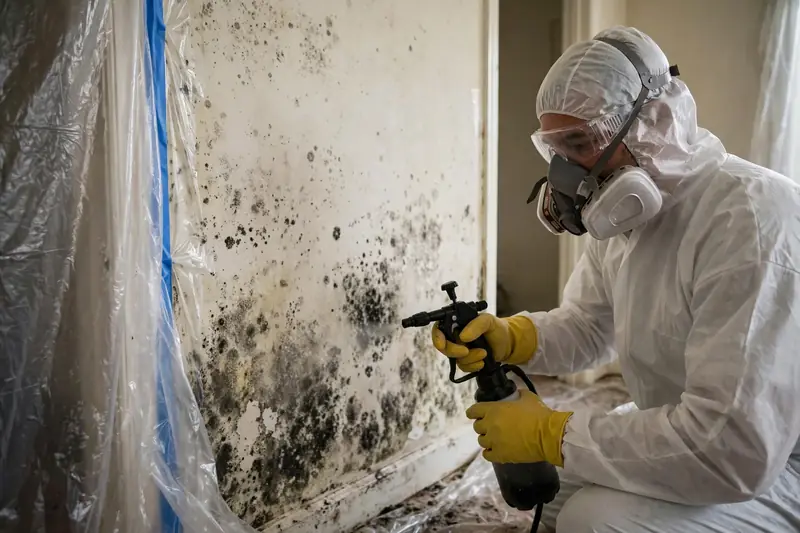
The short answer: After water damage, mold can begin growing within 24 to 48 hours if wet materials are not dried. That window is published guidance from the U.S. Environmental Protection Agency (EPA), and it is the single most important deadline in water damage response. The clock starts when water first contacts the material, not when you notice the damage. Spores are already present in every home. They only need moisture, warmth, and something organic to eat, and wet drywall, insulation, wood, and carpet provide all three. If your home has had a leak, flood, or overflow, call RestoreNov at (480) 701-8249 quickly, because the difference between a drying job and a mold remediation job is often measured in hours.
Why 24 to 48 Hours? The Biology in Plain Language
Mold is a fungus. Its spores are microscopic particles that float in indoor and outdoor air all the time. In a dry home, spores sit dormant on surfaces and do nothing. They are not growing, not spreading, and not producing the musty odor people associate with mold. They are waiting.
Water changes everything. When a spore lands on a wet surface with organic material to feed on, it absorbs moisture and germinates. Germination means the spore sends out tiny root like filaments called hyphae that penetrate into the material and begin feeding. This is the start of a colony, and under favorable conditions it begins within 24 hours of wetting.
What counts as favorable? Typical indoor temperatures of 65 to 85 degrees Fahrenheit, relative humidity above 60 percent in the affected area, and a food source. Chandler homes sit squarely in the temperature range year round. A wet wall cavity after a leak easily exceeds 60 percent humidity. And the food source is the house itself: the paper facing on drywall, wood framing, insulation, carpet backing, cardboard, and dust are all organic material that mold can feed on.
The 24 to 48 hour figure is not the time when you see mold. Visible colonies typically appear between 24 and 72 hours on highly susceptible materials, and often take 3 to 7 days to become obvious. The 24 to 48 hour window is when germination starts. That distinction matters, because a wall that looks clean on day two can already have mold growing inside it. Waiting to see mold before acting is waiting too long.
The EPA's guidance is straightforward: water damaged areas and items that cannot be thoroughly dried within 24 to 48 hours should be assumed to have mold growth, or to be at high risk for it. The IICRC, the restoration industry's standards body, uses the same 24 to 48 hour benchmark in its S500 Standard for Professional Water Damage Restoration. When two independent authorities agree on the same window, it is not a sales tactic. It is the biology.
The Hour by Hour Timeline
Understanding what happens at each stage helps you understand why speed matters more than any single cleaning product or technique.
0 to 1 hour: water spreads. Water is absorbed into porous materials including drywall, carpet, upholstery, and wood. No mold growth has begun. This is the optimal window for extraction and drying. Water removed in this window never becomes a mold problem.
1 to 24 hours: absorption continues. Materials keep absorbing moisture. Wood begins to swell. Drywall begins to wick moisture upward from the base. Spores on the surface have access to moisture but have not yet germinated. Professional response in this window typically prevents mold entirely, because the materials can still be dried before germination starts.
24 to 48 hours: the critical threshold. Under favorable conditions, spores begin to germinate on wet organic materials. Germination is the first stage of colonization and is generally not visible to the naked eye. The musty odor may begin to develop. This is the window the EPA guidance describes. Drying that starts in this window can still prevent visible growth, but the margin is shrinking fast.
48 to 72 hours: colonies develop. Mold colonies that began germinating in the prior window continue to develop. Some visible growth may begin to appear on highly susceptible materials such as paper faced drywall, particularly in warm, humid conditions. Odor becomes more noticeable.
3 to 7 days: visible growth. Colonies become established and may become visible on a wider range of materials. The musty smell many homeowners associate with mold often becomes detectable during this window even before growth is visually obvious. At this stage, the job has shifted from drying to remediation.
1 to 2 weeks: spread. Visible growth is common on affected porous materials if drying did not occur. Mold may begin to spread beyond the immediately wet area as spores are released and find new moisture sources nearby.
2 weeks and beyond: entrenched growth. Without intervention, growth continues to expand. Structural materials may begin to show signs of deterioration from sustained moisture and microbial activity. The scope of remediation required grows substantially compared to earlier intervention.
The lesson of the timeline is not that you have 48 hours of safety and then disaster strikes at hour 49. The lesson is that risk rises continuously, and the earlier you dry, the less you have to remediate.
What Mold Feeds On in Your Home
Mold does not need much. It needs moisture, warmth, and organic material. Your home is full of organic material, much of it hidden inside walls and floors.
Drywall paper facing. The single most mold vulnerable material in a modern home. Gypsum board is porous, it holds moisture deep in its core, and its paper facing is cellulose, which is ideal mold food. A surface that feels dry to the touch may still contain 20 to 30 percent moisture internally, which is more than enough to sustain active growth. This is why drywall that got wet and was never properly dried is the most common site of hidden mold.
Wood framing and subfloor. Wood absorbs moisture slowly and releases it slowly, which means it stays wet longer than many other materials. Framing inside a wall cavity can remain damp for weeks after the drywall surface looks dry, giving mold a long, uninterrupted feeding period.
Insulation. Fiberglass insulation does not itself feed mold readily, but it traps moisture against framing and drywall, holds dust and organic debris that mold can feed on, and is extremely difficult to dry in place once saturated. Wet insulation is one of the most common reasons a wall cavity stays damp long after the visible damage is addressed.
Carpet and carpet padding. Carpet padding is a sponge. It absorbs water, holds it against the subfloor, and provides a large surface area for growth. Carpet that has been wet for more than 48 hours, especially with contaminated water, often cannot be restored.
Cardboard, paper, and fabrics. Boxes in a garage or closet, books, clothing, and upholstered furniture are all food sources. Cardboard boxes on a garage floor after a water heater leak or monsoon intrusion are a classic hidden mold site, because nobody thinks to check inside them.
Dust. Even materials that are not themselves organic, such as concrete or metal, can support mold growth if they are coated with dust. Dust is organic, and a thin layer of it on a damp concrete slab is enough for a colony to establish.
The practical point is that you cannot remove the food source. Your house is made of it. The only variable you control is moisture. Dry the materials, and mold cannot grow. Leave them wet, and it will.
Why Chandler's Climate Makes the Window Tighter, Not Looser
Many Chandler homeowners assume the desert climate protects them from mold. It does not. It changes the pattern, but it does not eliminate the risk.
Indoor temperatures favor growth. Mold thrives between 70 and 90 degrees Fahrenheit. Chandler homes sit in that range for much of the year. A wet wall cavity in an air conditioned home is still warm enough for rapid germination.
Monsoon humidity spikes. From July through September, indoor humidity rises, and the moisture load on wet materials increases. A leak that happens during monsoon season dries slower and grows mold faster than the same leak in dry February air. Our article on monsoon flood preparation explains the seasonal pattern.
Air conditioning hides the problem. Air conditioning keeps the living space comfortable and the visible surfaces dry, while the inside of a wall cavity stays wet. A homeowner who feels cool, dry air in the room may not realize that the wall cavity behind the drywall is at 90 percent humidity. The AC dries the room, not the wall.
Desert dryness creates false confidence. Because Chandler air is dry most of the year, homeowners assume a wet wall will "dry out on its own." Sometimes a small amount of surface moisture does evaporate. But moisture inside a wall cavity, under flooring, or in insulation does not evaporate on its own at a meaningful rate. It sits, it feeds mold, and it spreads. Air drying is far too slow and too uneven for enclosed spaces.
Slab foundations trap moisture. Chandler homes on concrete slabs have no basement to ventilate and no crawl space to inspect. Water that gets under flooring or into wall bases has limited paths to escape. It stays longer, and it stays in contact with organic materials the entire time.
The Water Category Changes the Mold Risk
Not all water carries the same mold risk. The IICRC S500 standard classifies water into three categories, and the category affects both the mold timeline and the response.
Category 1, clean water, comes from a sanitary source such as a supply line break, a clean sink overflow, or a refrigerator ice maker line. It carries no significant contamination at the time of loss. Mold risk begins at 24 to 48 hours if the water is not dried. Most materials are salvageable with prompt drying. But clean water that sits for 24 to 48 hours degrades to Category 2, because it picks up contaminants from the materials and surfaces it contacts.
Category 2, gray water, carries significant contamination that can cause illness on contact. Sources include washing machine discharge, dishwasher overflow, and toilet overflow with urine but no solids. Gray water accelerates microbial growth, and porous materials it touches are typically removed rather than dried in place. The mold timeline is shorter, because the water already carries organic matter and microbes.
Category 3, black water, is grossly contaminated and carries pathogens. Sources include sewage backup, toilet backflow from beyond the trap, and rising floodwater from outside. Porous materials that contact black water are removed, with no exception under the standard. Mold risk is acute, and the health risk from the water itself is immediate. See our article on clean, gray, and black water for the full category system, and our article on sewage backup for the specific response.
The practical takeaway: the clock runs faster as the category rises. A clean water leak gives you a real 24 to 48 hour drying window. A gray or black water event compresses that window and changes the response from drying to removal.
What Drying Within the Window Actually Requires
Drying within 24 to 48 hours is not a matter of opening windows and running a household fan. It requires a specific process, and each step exists for a reason.
Extraction first. Standing water must be removed before drying can start. A wet vacuum or professional extractor pulls water out of carpet, flooring, and the surface of hard floors. Every gallon extracted is a gallon that does not have to be evaporated.
Moisture mapping. A technician uses pin and pinless moisture meters and a thermal imaging camera to find how far water traveled. This step is essential, because water migrates well beyond the visible wet area. Drying only the visible area leaves the hidden moisture in place, and hidden moisture is where mold grows.
Removal of unsalvageable materials. Wet insulation, saturated drywall, and soaked carpet padding often cannot be dried effectively in place. They are removed so that drying equipment can reach the structure behind them. Removing them also removes the most mold vulnerable materials from the assembly.
Airflow and dehumidification. Air movers push dry air across wet surfaces to speed evaporation. Dehumidifiers pull the evaporated moisture out of the air so it does not recondense on other surfaces. Both are required. Airflow without dehumidification just moves moisture around the house. Dehumidification without airflow leaves stagnant, damp pockets inside cavities.
Verification with meters. Drying is complete when moisture meter readings match the dry standard for each material, not when the surface feels dry. A wall that feels dry can still be 25 percent moisture inside. Only meters tell the truth. Our article on how long structural drying takes explains the drying process, equipment, and timelines in full.
Documentation. Moisture readings, photos, and equipment logs create a record that the structure was dried to standard. That record matters for insurance claims, for future home sales, and for your own peace of mind.
What To Do in the First 24 Hours
If you have just discovered water damage, these are the steps that protect your home within the window.
- Stop the source. Turn off the water to the leaking fixture or the main valve. Call a plumber if the source is a pipe. Drying over an active leak is wasted effort.
- Protect yourself. If the water is gray or black, or if it may have contacted sewage, do not enter it without protective gear. If water is near electrical outlets or appliances, turn off power to the area from a dry location. Do not touch wet electrical equipment.
- Remove standing water if it is clean water and it is safe to do so. A wet vacuum, mop, and buckets handle shallow water. Move furniture and belongings out of the wet area.
- Do not disturb visible mold. If you see mold, do not scrub it, do not vacuum it with a household vacuum, and do not run fans across it. Disturbing a colony releases spores into the air and spreads the problem. Leave it for professionals.
- Call a restoration team. Professional extraction and drying should start as soon as possible. Our emergency water extraction service removes standing water and maps moisture, and our structural drying and dehumidification service dries the structure to verified standards.
- Document everything. Photograph the damage, the source, and the affected materials. Keep invoices and moisture readings. If you file an insurance claim, this documentation is essential. See our guide to water damage insurance claims in Arizona for what to document and how.
Common Mistakes That Let Mold Win
"It looks dry." The most common and most costly mistake. Surface dryness tells you nothing about moisture inside a wall cavity, under flooring, or in insulation. Only meters tell you.
Painting over a stain. Paint seals moisture inside the wall and hides the problem while mold grows behind it. The stain bleeds back through within weeks, and the wall is worse than before.
Running a household fan and calling it done. A household fan moves air across the surface. It does not dehumidify, it does not reach inside cavities, and it does not remove moisture from insulation or framing. It dries the surface and leaves the structure wet.
Waiting to see if mold appears. By the time mold is visible, germination started days ago and the colony is established. The window for prevention has closed. The job is now remediation, not drying.
Using bleach on porous materials. Bleach can disinfect a hard, nonporous surface, but it does not penetrate porous materials like drywall and wood. The water in bleach soaks into the material while the active ingredient stays on the surface, which can actually feed growth inside the material. Bleach is not a mold remediation strategy for porous building materials.
Ignoring the musty smell. A musty odor after water damage is a signal, not a nuisance. It means microbial growth is active somewhere, even if you cannot see it. Investigate the smell with moisture meters and, if necessary, professional assessment.
Health Considerations: What to Know Without Alarm
Mold exposure affects people differently. Some people have no symptoms. Others develop allergic reactions, respiratory irritation, headaches, or worsened asthma. People with weakened immune systems, chronic respiratory conditions, and young children are more vulnerable. This article is not medical advice, and if you have health concerns related to mold exposure, speak with a healthcare professional.
What homeowners should know is practical. Do not disturb visible mold. Do not sleep in a room with visible mold growth. Keep children and pets away from affected areas. If a large area is affected, or if anyone in the household has respiratory conditions, consider staying elsewhere until remediation is complete. Professional remediation uses containment barriers and HEPA air filtration to prevent spores from spreading to clean areas of the home during removal. That containment is one of the main reasons professional remediation differs from DIY cleanup.
Frequently Asked Questions
How fast does mold grow after water damage?
Mold spores can begin germinating within 24 to 48 hours of water exposure if materials stay wet. Visible colonies typically appear between 24 and 72 hours on highly susceptible materials such as paper faced drywall, and often take 3 to 7 days to become obvious. The EPA advises that areas not dried within 24 to 48 hours should be assumed to have mold growth or to be at high risk for it.
Can mold grow in a dry climate like Chandler?
Yes. Indoor temperatures in Chandler homes are in the ideal range for mold growth year round, and a wet wall cavity provides the humidity mold needs regardless of outdoor dryness. Monsoon season adds humidity that accelerates growth. Desert dryness does not protect a wet wall cavity, because the moisture is trapped inside the structure, not exposed to outdoor air.
I dried the surface. Is that enough?
No. Surface dryness does not mean the structure is dry. Moisture inside wall cavities, under flooring, and in insulation can remain at levels that sustain mold growth long after the surface feels dry. Only moisture meter readings that match the dry standard for each material confirm that drying is complete.
What if I missed the 48 hour window?
Call a restoration team for an assessment. Missing the window does not mean the home is ruined. It means the response shifts from drying to a combination of drying and mold remediation. A professional assessment with moisture mapping and, if needed, inspection for visible growth determines the scope. The sooner you act after missing the window, the smaller the remediation scope.
Can I clean up small mold growth myself?
For a very small area on a hard, nonporous surface, careful cleaning with appropriate protection may be reasonable. For growth on porous materials like drywall, insulation, or carpet, or for any area larger than a small patch, professional remediation is the safer choice. Porous materials with mold growth generally must be removed, not cleaned, because the growth penetrates the material. Do not disturb a colony with a household vacuum or a fan.
Does bleach kill mold?
Bleach can disinfect hard, nonporous surfaces, but it does not penetrate porous materials like drywall and wood. The water in bleach soaks into the material while the active ingredient stays on the surface, which can leave growth alive inside the material. Bleach is not a reliable mold remediation strategy for porous building materials.
Will my insurance cover mold after water damage?
It depends on the cause and your policy. Mold that results from a covered water event, such as a sudden pipe burst, is often covered as part of the claim. Mold from a long term leak or maintenance issue is often excluded. Document the water event, the timeline, and the response. See our guide to water damage insurance claims in Arizona for the details.
How do I know if there is mold inside my walls?
Signs include a persistent musty odor, stains or discoloration on walls, allergy like symptoms that are worse indoors, and a history of water damage that was never professionally dried. Moisture meters and thermal imaging can find wet areas inside walls. If growth is suspected, a professional assessment can confirm the extent before any walls are opened.
---
Need Help With Water Damage in Chandler?
If you are dealing with this problem in your Chandler home, call RestoreNov at (480) 701-8249 for an assessment. See our Mold Remediation and Structural Drying pages for how the work is handled.