
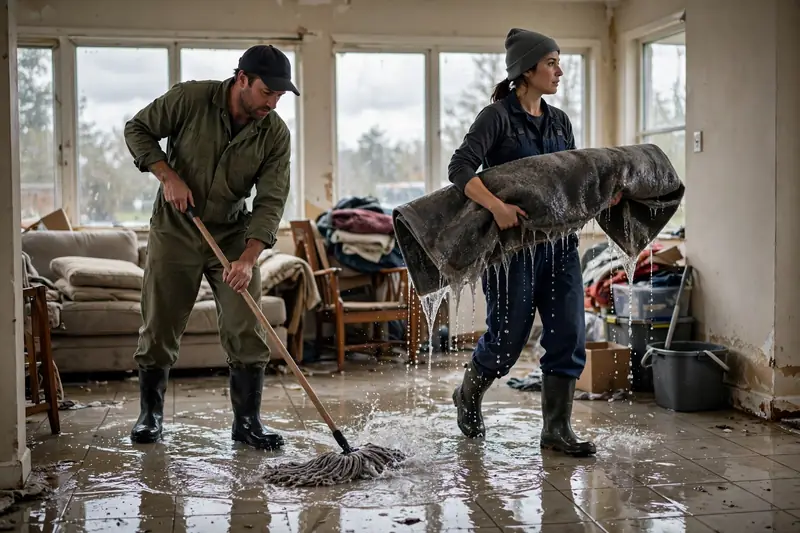
Flood Damage Restoration in Chandler, AZ
When floodwater enters your Chandler home, you are dealing with the most dangerous and most destructive category of water damage. Floodwater is not clean water.
When floodwater enters your Chandler home, you are dealing with the most dangerous and most destructive category of water damage. Floodwater is not clean water. It has traveled across streets, yards, and soil, picking up sewage, chemicals, bacteria, and debris on the way in. It soaks everything it touches, and it keeps damaging your home until it is removed, the structure is dried, contaminated materials are removed, and repairs are complete. RestoreNov provides 24/7 emergency flood damage restoration across Chandler and the East Valley. Call (480) 701-8249 now if floodwater is in your home.
Direct answer: Flood damage restoration is the professional process of removing floodwater, removing contaminated porous materials, cleaning and sanitizing affected surfaces, drying the structure with moisture verification, and repairing damaged materials so your home returns to a safe, dry, pre-loss condition. Floodwater is Category 3 black water, even if it looks clear. For most Chandler homes, emergency extraction starts on the first visit, structural drying takes 3 to 5 days, and repairs follow once moisture readings confirm the structure is dry. Flood damage from outside rising water usually requires separate flood insurance, which is general information, not insurance advice.
What Happens When You Call
Here is the short version of what happens when you call (480) 701-8249.
- Step 1 - Call and assessment. Tell us where the water entered, how deep it is, and whether it came from outside rising water. We ask about power, sewage, and who is in the home, so the crew arrives with the right safety plan.
- Step 2 - Remove water and clean. Pumps and extractors remove the water, contaminated porous materials are taken out, and hard surfaces that can be salvaged are cleaned and treated.
- Step 3 - Repair and verify. The structure is dried with moisture checks, damaged materials are repaired, and the final readings are recorded so you have a written record of the job.
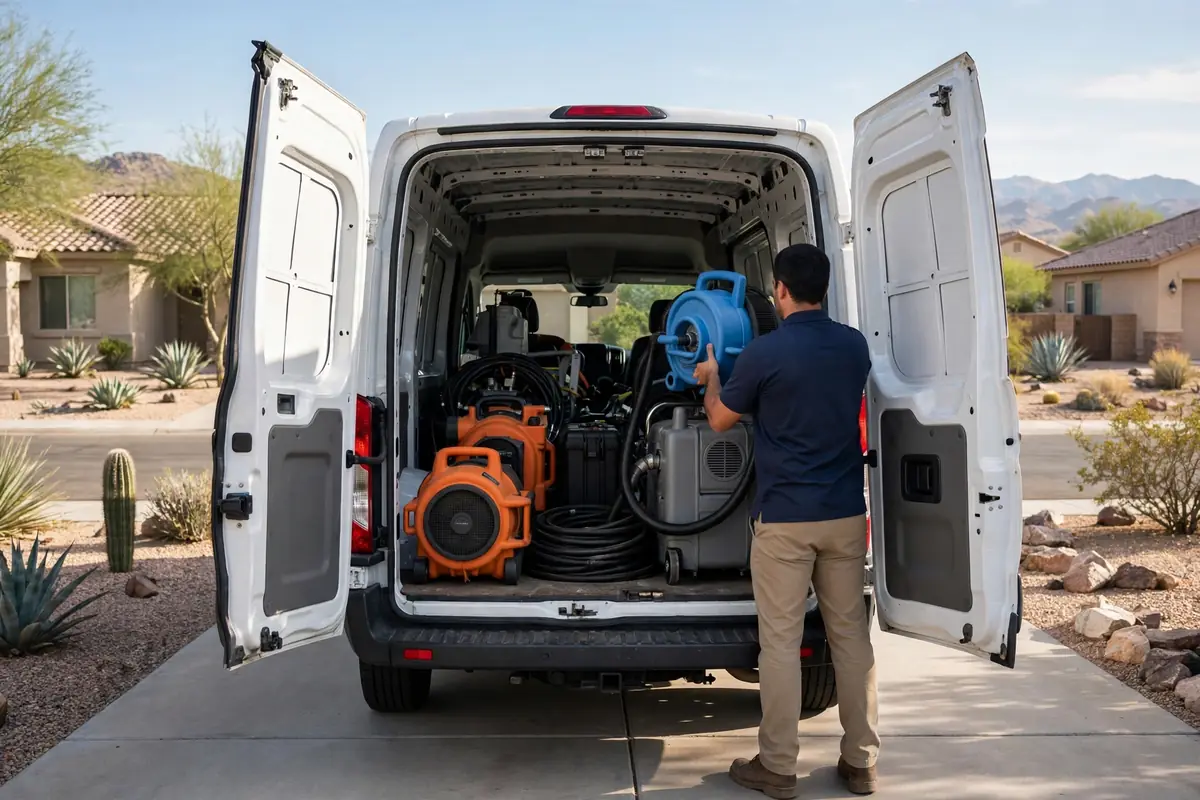
What Flood Damage Means in Chandler
Chandler does not have rivers running through neighborhoods, and it does not have basements. Flooding here looks different from flooding in other parts of the country, and understanding the local pattern helps you recognize risk before water is inside your home.
Chandler flooding is almost always monsoon flooding. Arizona monsoon season runs roughly June through September. Short, violent storms can drop more than an inch of rain in under an hour. That volume overwhelms roof drainage, yard grading, street drainage, and retention basins faster than the water can drain away. Water ponds in streets, runs over curbs, crosses yards, and enters homes through door thresholds, garage entries, window frames, and low vents. A haboob dust storm that arrives ahead of the rain can clog roof drains and gutters, which makes the flooding worse, because the drainage system is already blocked when the rain arrives.
Chandler flooding is also flash flooding. The ground here is hard, dry, and often covered with desert landscaping, gravel, and concrete. Dry desert soil absorbs water slowly at first, so a large share of monsoon rainfall becomes surface runoff instead of soaking in. That runoff concentrates in washes, low spots, and streets, and it moves fast. A wash that is dry all year can carry a fast, debris-laden flow within minutes of a storm. Homes near washes, low spots, and streets with poor drainage face the highest risk, and homes at the bottom of a slope collect the runoff from every property above them.
A third local pattern is the slow, quiet flood. A clogged roof drain, a failed scupper, or a yard that drains toward the house instead of away from it can push water into a home over hours without a dramatic storm. Water comes through a garage door that sits below street level, or under a sliding door whose track drain is blocked with debris. The homeowner discovers it in the morning, after the water has had all night to soak into drywall, flooring, and wall cavities. The volume is smaller than a flash flood, but the contamination is the same, and the drying and removal scope can be just as large.
What This Service Covers
Flood damage restoration covers the full cleanup after floodwater enters your home, from water removal through drying and documentation.
- Removal of standing floodwater from floors and low areas
- Removal of contaminated porous materials, such as soaked pad, insulation, and unsalvageable drywall
- Cleaning and antimicrobial treatment of hard surfaces that can be salvaged
- Flood cuts in drywall where needed to release trapped water and open wall cavities
- Structural drying with moisture verification
- Photos, moisture readings, and a written scope for your records
- Guidance on what to keep, clean, or discard, by material type
Floodwater Is Category 3 Black Water
Restoration professionals classify water by contamination level, and floodwater sits in the most dangerous category. Category 1 is clean water, from a supply line break or a tub overflow without contaminants. Category 2 is gray water, with significant contamination, from a washing machine, dishwasher, or toilet overflow with urine but no feces. Category 3 is black water: grossly contaminated water, including sewage, floodwater from outside the structure, and water that has traveled through soil or waste lines.
Floodwater counts as Category 3 even if it looks clear. It has picked up contaminants on its way into your home: sewage from overwhelmed or backed-up sewer lines, animal waste from yards, pesticides and fertilizers from landscaping, motor oil and chemicals from streets and driveways, and bacteria and pathogens from soil. You cannot judge floodwater safety by appearance. Clear floodwater is still black water, and it must be treated as a health hazard, not a cleanup job for household tools.
The Category 3 classification changes everything about the job. It changes the safety steps, the equipment, the removal scope, and the sanitization scope. Porous materials soaked with Category 3 water are normally removed, not dried in place, because they cannot be reliably sanitized once contamination has soaked through. Carpet, carpet pad, the lower portion of drywall, soaked insulation, and upholstered items that sat in floodwater are removed. Hard surfaces are cleaned and sanitized. The structure is dried only after removal and sanitization, so drying does not lock contamination inside walls.
Safety First: What To Do and What Not To Do
Floodwater is dangerous in ways that are not obvious. Follow these rules, and do not improvise.
Do not walk through floodwater where it may reach outlets, cords, or appliances. Floodwater conducts electricity. If water is near electrical equipment, switch off the breaker for the affected rooms, and only if you can reach it without standing in water. If you cannot reach the breaker safely, wait for the crew.
Do not let children or pets near floodwater. Children and pets are more vulnerable to the pathogens in Category 3 water, and they are more likely to touch their faces or mouths after contact. Keep them out of affected rooms entirely until the area is cleaned, sanitized, and dry.
Do not use household vacuums, mops, or fans on floodwater. Standard vacuums are not built for water and create a shock hazard. Mops spread contamination. Household fans aerosolize contaminants and push them into clean areas of the home.
Do not drink, cook with, or bathe in water that may have been contaminated by flooding. If your water supply may have been affected, follow guidance from your local water utility and use bottled water until the supply is confirmed safe.
Do shut off the water source if you can do it safely. If floodwater is entering through a plumbing failure rather than from outside, shut off the main water valve. In most Chandler homes the main shutoff is at the street meter box, the front hose bib, or the garage.
Do document the damage. Photograph and video every affected room, the water line on walls, and every damaged item before anything is moved or removed. Keep a written log of every call you make, including the time and who you spoke with. This documentation supports your insurance claim.
Do call your insurance company and a restoration company immediately. Flood response is time-critical, and the first hours determine how much of your home can be saved. Call (480) 701-8249 for live 24/7 emergency response.
Safe for Family and Pets
Safe for Family and Pets: During flood cleanup, keep family members and pets out of rooms where work is underway. The crew uses containment to keep dust and debris in the work area, HEPA filtration to capture airborne particles, and cleaning products applied exactly as their labels direct. Stay clear of wet rooms, drying equipment, and open wall cavities until the crew tells you the area is ready to use again. If anyone in the home has breathing trouble, allergies, or a weakened immune system, mention it on the first call so the crew can plan access and containment around it.
The Full Flood Restoration Sequence
Flood restoration follows a fixed sequence. Each step depends on the step before it, and skipping a step leaves contamination or moisture behind.
- 1. Emergency call and dispatch. Your call is answered live, 24 hours a day. You describe the water source, the affected rooms, whether the water is still rising, and whether the water is sewage-contaminated. A crew is dispatched with extraction equipment, protective gear, moisture meters, air movers, and dehumidifiers.
- 2. Safety assessment and source control. On arrival, the crew checks for electrical hazards, structural hazards, and contamination. They confirm whether water is still entering and help stop it where possible. If the structure shows signs of damage, such as a sagging ceiling or a buckled floor, the crew restricts access to that area before work begins.
- 3. Inspection and moisture mapping. The crew inspects every affected area and the rooms next to it. Moisture meters measure saturation in drywall, flooring, and framing. Thermal imaging cameras reveal hidden moisture behind walls and under floors. The crew maps the full extent of the moisture, including the high-water line on walls, and writes a scope of work.
- 4. Floodwater extraction. Standing floodwater is removed with submersible pumps and truck-mounted or portable extractors. The full extraction sequence, including equipment types and floor-type technique, is on the emergency water extraction page. Flood extraction follows black water protocols, with protective equipment and containment from the start.
- 5. Removal of contaminated porous materials. This is the step that separates flood restoration from clean water restoration. Carpet and carpet pad soaked with floodwater are removed. Drywall below the flood line is cut out, usually with a flood cut, covered in detail below. Soaked insulation is removed. Upholstered furniture, mattresses, and soft items that sat in floodwater are normally removed. Particle board and MDF that swelled are removed. These materials cannot be reliably sanitized in place, and leaving them in place means leaving contamination in your walls.
- 6. Cleaning and sanitizing. All remaining surfaces are cleaned and treated with antimicrobial products and disinfectants. Hard surfaces are wiped and sanitized. Wall cavities opened by flood cuts are cleaned and treated. Air scrubbers with HEPA filtration run during and after this step to reduce airborne particles. Sanitization after a flood is a major part of the job, not an afterthought.
- 7. Structural drying and dehumidification. Commercial air movers and low-grain refrigerant (LGR) dehumidifiers run until moisture readings confirm the structure is dry. Technicians return daily to take moisture readings, reposition equipment, and record progress. Drying is complete when materials reach their dry standard, not when they feel dry. The full drying science is on the structural drying and dehumidification page.
- 8. Mold prevention and monitoring. Fast, verified drying is the core of mold prevention. Published industry guidance says mold growth can begin in wet materials within 24 to 48 hours, and flood jobs carry elevated mold risk because the water was contaminated and the wetting was often prolonged. Where mold growth is found, containment and remediation steps are added. The full mold sequence is on the mold remediation after water damage page.
- 9. Repair and rebuild. Once the structure is verified dry, damaged drywall, baseboards, flooring, paint, and trim are repaired or replaced. The goal is a room that looks and feels the way it did before the flood.
- 10. Final walkthrough and moisture verification. Before the job is closed, the crew walks the space with you, reviews the final moisture readings, and confirms the scope is complete. You receive the documentation package for your records and your insurance carrier.
Flood Cuts: Why Drywall Gets Cut, and How
A flood cut is a horizontal cut in drywall, made at a measured height above the water line, so the wet and contaminated lower portion can be removed and the wall cavity behind it can be dried and sanitized. Flood cuts are standard practice after floodwater exposure, and they are one of the most misunderstood parts of the job. Homeowners sometimes see a crew cutting out drywall and think the damage is worse than it is. In fact, the flood cut is what keeps the damage from getting worse.
Here is why the cut is necessary. Floodwater wicks up drywall through capillary action. The water line inside the wall is higher than the water line on the floor, because drywall pulls water upward. Insulation inside the cavity also absorbs water and holds it. Neither the drywall core nor the insulation can be dried reliably from the outside, and both hold Category 3 contamination after a flood. Cutting out the lower portion exposes the cavity, allows wet insulation to be removed, allows the framing to be cleaned and dried directly, and allows the remaining drywall to dry cleanly from both sides.
Flood cut height depends on the water line and the material. A common cut is 2 feet above the floor, which matches a standard drywall sheet size and simplifies replacement. Higher water lines call for higher cuts, sometimes 4 feet. The crew measures the moisture line with a meter, not by eye, and cuts above the highest reading, so no wet drywall is left behind. The removed section is bagged and disposed of. The remaining drywall edge is clean, dry, and ready for new drywall once readings confirm the cavity is dry.
Flood cuts are repairable. New drywall is installed, seams are taped and finished, texture is matched, and the wall is primed and painted. The full wall repair sequence is on the ceiling and wall water damage repair page.
Chandler Flood-Prone Contexts
Some Chandler homes and situations carry higher flood risk than others. Knowing where your home sits in this picture helps you prepare and helps you describe the risk when you call.
Homes near washes and drainage channels. Washes carry storm runoff, and homes beside them face fast-rising water during monsoon storms. Even a wash that looks like a dry ditch for most of the year can carry a debris-laden flow within minutes of a storm. Keep wash-facing doors and vents in mind, and never assume a wash will stay dry during a storm.
Low spots and homes at the bottom of a slope. Water flows downhill, and a home at the low point of a street or a neighborhood collects runoff from every property above it. If your yard ponds after rain, or if your garage floor sits below street level, your flood risk is higher than a neighbor on higher ground.
Poor drainage and grading that slopes toward the house. Yard grading should slope away from the foundation. When grading settles, when landscaping changes the slope, or when a patio or addition blocks a drainage path, water ponds against the house and finds its way in through door thresholds, weep holes, and foundation joints.
Clogged roof drains, gutters, and scuppers. Flat and low-slope roofs common in Chandler homes rely on scuppers and drains to shed monsoon rainfall. A scupper blocked with haboob dust, leaves, or debris turns a roof into a pond, and ponded water finds the weakest flashing joint and enters the attic. Roof drainage maintenance before monsoon season is one of the highest-value flood prevention steps a Chandler homeowner can take.
Garage entries below street level. Garage floors often sit lower than the street, and a garage door threshold is a wide, low opening. Monsoon runoff that ponds in the street can flow under a garage door and across the garage floor, then into the home through the interior garage door. Sandbags or a temporary threshold barrier during a storm warning can help, but once water is inside, call for extraction immediately.
Window wells and low vents. Ground-level windows, vents, and utility penetrations below the local high-water line are entry points. Check them before monsoon season, and keep the area around them clear of debris that could dam water against the opening.
HOA retention basins and common areas. Many Chandler neighborhoods use retention basins to manage storm runoff. A basin that fills during a storm is doing its job. A basin that overflows because its outlet is blocked is a flood source. Report a blocked basin outlet to your HOA or property manager before a storm, not during one.
What Flood Insurance Does and Does Not Cover: General Information
This section is general information, not insurance advice. Your policy wording controls your coverage, and your insurance agent or adjuster is the authority on your specific claim. With that said, the general pattern in Arizona is important to understand before a flood, because flood coverage works differently from ordinary homeowners coverage.
Standard homeowners policies generally do not cover flood damage from outside rising water. A standard homeowners policy usually covers sudden and accidental water damage from inside the home, such as a burst pipe or a sudden appliance failure. Flood damage from rising water outside the home, including monsoon runoff, wash overflow, and street flooding that enters the home, usually requires separate flood insurance, typically through the National Flood Insurance Program (NFIP) or a private flood insurer.
Flood insurance usually covers the structure and, depending on the policy, contents. A flood policy typically covers structural elements, such as drywall, flooring, electrical systems, and built-in appliances, and may cover contents, such as furniture and personal property, up to policy limits. Coverage limits, deductibles, and waiting periods vary by policy. NFIP policies commonly carry a waiting period before coverage takes effect, which is why flood insurance must be purchased before a storm, not during one.
Sewer backup coverage is usually a separate endorsement. A flood policy does not necessarily cover a sewer backup, and a standard homeowners policy does not necessarily cover one either. Sewer backup coverage is commonly purchased as a separate endorsement with its own sub-limit. Check your declarations page for a sewer backup or water backup entry, and ask your agent what it covers before you need it.
Documentation matters for every flood claim. Photograph the high-water line on walls, the affected rooms, and every damaged item before anything is moved or removed. Keep a written log of every call, including the time and who you spoke with. Keep every receipt. We document the loss with photos, moisture readings, drying logs, and a written scope, so your adjuster has what is needed, and we can coordinate with your carrier so you are not managing multiple vendors at once.
Do not wait for an adjuster before mitigating. Mitigation, meaning extraction, drying, and removal of contaminated materials, should start immediately. Waiting for an adjuster while floodwater sits in your home makes the damage worse and can complicate the claim. Document first, then mitigate. Most policies require the homeowner to mitigate further damage promptly, and mitigation costs are commonly part of the claim.
Flood Damage by Room: What to Expect
Floodwater does not affect every room the same way, and the restoration scope changes with the room.
Garage. The most common first room flooded in Chandler, because the garage floor sits low and the door threshold is wide. Concrete floor, stored items, drywall at the floor line, and the water heater and HVAC equipment if they sit in the garage. Water heater and HVAC equipment that sat in floodwater must be inspected by a qualified technician before use, because floodwater damages electrical components, gas valves, and controls.
Living areas and bedrooms. Carpet and pad, hardwood or laminate flooring, baseboards, lower drywall, and furniture. Carpet and pad soaked with floodwater are normally removed. Hardwood that sat in floodwater often cups beyond recovery. Lower drywall gets a flood cut. Furniture with particle board or MDF bases usually cannot be salvaged after flood exposure.
Kitchen. Cabinets, toe kicks, appliances, and flooring. Cabinet boxes with particle board or MDF swell and do not recover. Solid wood cabinets may survive with cavity drying. Appliances that sat in floodwater must be inspected by a qualified technician before use. The area under cabinets hides moisture and needs cavity drying or removal to dry fully.
Bathrooms. Tile floors, vanities, and wall bases. Tile itself survives, but water seeps through grout into the subfloor and wall cavities, and vanities with particle board bases usually do not survive. Floor drains and toilets are also the entry points for sewage contamination during a flood, so bathrooms get extra sanitization attention.
Laundry room and utility room. Washer, dryer, water heater, and storage. Appliances that sat in floodwater need professional inspection before use. The room often has a floor drain, which can be both a flood entry point and a drainage point during extraction.
Mold Risk After a Flood
Flood jobs carry the highest mold risk of any water damage type, for three reasons. First, the water was contaminated, which adds organic material that feeds mold. Second, the wetting was often prolonged, because floodwater can sit for hours before it is discovered or before it recedes. Third, the wetting was often deep, reaching wall cavities, insulation, and subfloors that are slow to dry. Published industry guidance says mold growth can begin in wet materials within 24 to 48 hours, and flood conditions push toward the fast end of that window.
The response is speed plus verification. Extraction starts on the first visit. Contaminated materials are removed. Sanitization follows removal. Drying follows sanitization, with daily moisture readings until the structure reaches its dry standard. Where mold growth is found, containment, HEPA filtration, and removal of affected materials are added, and the area stays isolated until it is clean and dry. The full mold sequence is on the mold remediation after water damage page.
Flood Prevention for Chandler Homes
You cannot control monsoon storms, but you can reduce your flood risk with maintenance and preparation.
- Clean roof drains, gutters, and scuppers before monsoon season, and again after a haboob. Blocked drainage is one of the most common causes of preventable flooding.
- Check yard grading. Soil should slope away from the foundation. Regrade low spots where water ponds against the house.
- Keep door thresholds and garage entries clear. Debris against a threshold dams water toward the opening. A threshold barrier or sandbags during a storm warning can help for garage entries below street level.
- Know your main water shutoff and your breaker panel. In a flood, seconds matter, and knowing where these are before the event saves time.
- Move valuables and documents off the floor. Store important documents, electronics, and irreplaceable items above the floor line, especially in garages and ground-floor rooms.
- Check flood insurance before monsoon season. Standard homeowners policies generally do not cover flood damage from outside rising water. If you do not have flood insurance, ask your agent about it well before a storm, because flood policies commonly carry a waiting period.
- Keep your sewer backup endorsement current. Flood events commonly cause sewer backups, and sewer backup coverage is usually a separate endorsement with its own limit.
- Photograph your home before monsoon season. Pre-loss photos of rooms, finishes, and valuables make any later claim faster and simpler.
Areas We Serve in Chandler and the East Valley
We provide flood damage restoration across Chandler and the surrounding East Valley. Our address is 1651-1683 E Germann Rd, Chandler, AZ 85286, and our crews come to you.
Serving Chandler and the East Valley: Downtown Chandler, Ocotillo, Fulton Ranch, Sun Groves, Tumbleweed Park, Gilbert, Mesa, Tempe, Queen Creek, Sun Lakes, Ahwatukee, Higley.
We also serve Chandler neighborhoods including Andersen Springs, Pecos Ranch, Clemente Ranch, Fox Crossing, Cooper Commons, and Dobson Place.
Tools & Technology We Use
Flood jobs need the full equipment set, because floodwater is contaminated and it reaches places clean water rarely does. Each tool below plays a specific part in the sequence.
- Pumps move deep standing floodwater out first, where an extractor alone would take too long.
- Extractors pull the remaining water from floors, carpet, and hard surfaces after the pumps finish the bulk removal.
- Air movers push dry air across wet surfaces to speed evaporation once the water is out and contaminated materials are removed.
- Dehumidifiers pull moisture out of the air so evaporated water leaves the building instead of settling back into materials.
- Antimicrobial treatment cleaning products applied to hard, salvageable surfaces to reduce microbial growth after floodwater contact, used exactly as their labels direct.
- Moisture mapping moisture meters and thermal imaging combined to draw a map of how far floodwater traveled inside walls and under floors.
- Photo and documentation photos and readings taken at each stage, so the scope, the drying progress, and the final condition are all recorded.
Frequently Asked Questions
Yes. Floodwater is Category 3 black water regardless of appearance, because it has picked up sewage, chemicals, bacteria, and debris on its way into your home. Treat all floodwater as contaminated, keep children and pets out of it, and do not attempt to clean it with household tools.
Immediately. Call as soon as you find floodwater in your home. Extraction starts on the first visit, and every hour of delay increases contamination, material damage, and mold risk.
Carpet and carpet pad soaked with floodwater are normally removed, not dried, because they cannot be reliably sanitized once Category 3 contamination has soaked through. Replacement carpet and pad become part of the repair scope.
Floodwater wicks up drywall and soaks insulation inside the wall cavity. A flood cut removes the contaminated lower portion, exposes the cavity for cleaning and drying, and allows the remaining drywall to dry cleanly. The cut is repairable, and new drywall, texture, and paint restore the wall.
Standard homeowners policies generally do not cover flood damage from outside rising water. Flood damage usually requires separate flood insurance. This is general information, not advice about your policy. Check your policy wording and ask your agent or adjuster about your specific coverage.
It depends on the scope. A single-room flood may allow you to stay, with the affected area isolated. A multi-room flood, a sewage-contaminated flood, or a job with containment may make parts of the home unusable for days. Your crew will tell you what to expect before work starts.
Flood events commonly cause sewer backups. Tell the crew when you call, because sewage contamination changes the safety steps and the sanitization scope. The full sewage sequence is on the sewage cleanup page.
Stay out of the room and call immediately. A sagging ceiling can collapse, and it indicates a saturated ceiling assembly above. Do not push on it, do not poke it, and do not stand under it. See the ceiling and wall water damage repair page.
Call Now for Flood Damage Restoration in Chandler
Floodwater gets more dangerous and more destructive every hour it sits. Call RestoreNov now at (480) 701-8249 for live 24/7 emergency flood damage restoration across Chandler and the East Valley. Fast extraction, removal of contaminated materials, sanitization, moisture-verified drying, and insurance-ready documentation, all handled as one job. If floodwater is in your home right now, stay clear of electrical hazards, keep children and pets out of the water, and call.
Request a Call Back
Tell us what happened and where the water is. For emergencies, calling is fastest - a live person answers 24 hours a day.
Prefer to talk now?
Call (480) 701-8249 any time, day or night.
We serve Chandler and the East Valley: Downtown Chandler, Ocotillo, Fulton Ranch, Sun Groves, Tumbleweed Park, South Chandler, Gilbert, Mesa, Tempe, Queen Creek, Sun Lakes, Ahwatukee, and Higley.
Our address:
1651-1683 E Germann Rd, Chandler, AZ 85286
Send a Message
For immediate help, call (480) 701-8249. A live person answers 24 hours a day.
Online messaging is not connected yet. For immediate help, call (480) 701-8249.