
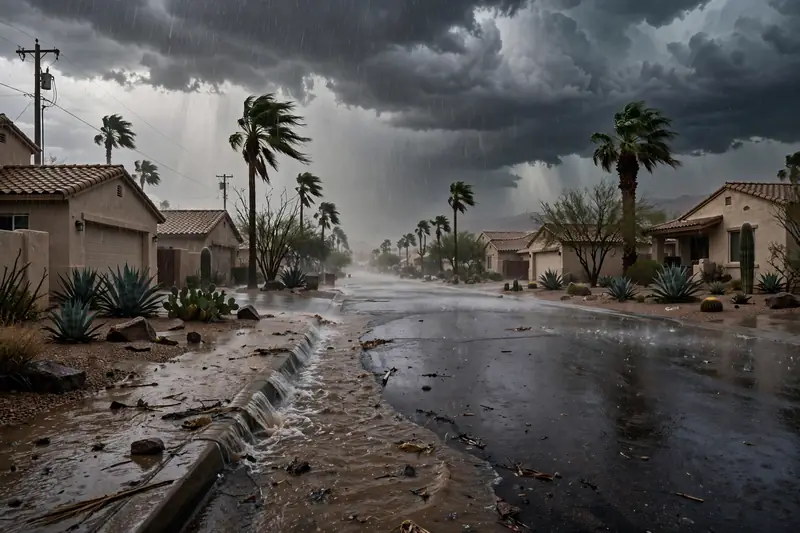
Storm and Monsoon Water Damage in Chandler, AZ
Chandler weather is dry for much of the year, and then, for a few summer months, it turns violent. The Arizona monsoon brings short, intense storms that can drop a large amount of rain in under an hour, drive wind strong enough to lift roofing materials, and push walls of dust ahead of the rain that clog the very drains meant to carry the water away.
Chandler weather is dry for much of the year, and then, for a few summer months, it turns violent. The Arizona monsoon brings short, intense storms that can drop a large amount of rain in under an hour, drive wind strong enough to lift roofing materials, and push walls of dust ahead of the rain that clog the very drains meant to carry the water away. A home that stayed dry all winter can take on water through the roof, windows, doors, garage, and foundation in a single storm. RestoreNov provides storm and monsoon water damage restoration across Chandler, AZ. Call (480) 701-8249 for emergency help.
Direct answer: Monsoon season in Arizona runs roughly June through September. During a storm, wind-driven rain can enter through roof valleys, flashing, vents, and damaged shingles, while flash flooding can push water through door thresholds, garage entries, and low spots in grading. Haboob dust storms that arrive ahead of the rain clog gutters, roof drains, and yard drainage, which makes the flooding worse. After a storm, the priorities are safety, stopping further entry, documenting damage, extracting standing water, and drying the structure before mold can start. If the storm is still active, stay inside, stay out of flooded washes and streets, and wait until it is safe to assess damage.
This page covers how monsoon storms damage Chandler homes, what to do during and after a storm, how storm damage differs from plumbing damage, and how to prepare before the next storm. It focuses on the storm as the cause. For standing-water cleanup from flooding, see our flood damage restoration page, which covers the flooding cleanup side of the same event.
What Happens When You Call
When you call about storm or monsoon damage, here is the sequence that follows. It runs from the first phone conversation through the final check that the home is dry and repaired.
- Step 1: Call and assessment You describe where water entered, whether the storm is still active, and whether any part of the home is unsafe to enter. We note roof, window, door, garage, and grading entry points so the visit is planned around the likely path of the water.
- Step 2: Remove water and protect the opening The crew extracts standing water, places temporary weather protection over the damaged opening, such as tarping or board-up, and starts drying the wet structure.
- Step 3: Repair and verify Once moisture readings confirm the structure is dry, damaged materials are replaced, finishes are restored, and a final check confirms the area is dry and the repair is complete.
How Monsoon Season Works in Chandler
The Arizona monsoon is a seasonal wind shift that brings moisture from the Gulf of California and the Gulf of Mexico into Arizona during the summer. The result is a pattern of afternoon and evening thunderstorms that build quickly, hit hard, and move on, often within an hour or two. The National Weather Service issues monsoon-related outlooks, watches, and warnings through the season, and Chandler homeowners learn to read the sky: a towering cumulus build-up in the afternoon, a sudden drop in temperature, and a wall of dust on the horizon mean a storm is close.
Monsoon storms are dangerous precisely because they are brief and intense. Rainfall rates can overwhelm systems designed for average desert rain. A roof, gutter, and yard drainage system that handles a winter drizzle can be overmatched by a monsoon downpour that drops more than an inch of rain in under an hour. Hard, dry desert soil absorbs water slowly at first, so more rain runs off the surface and toward low spots, streets, and homes. Washes that are dry all year can run with fast, deep water within minutes of a storm upstream.
Not every monsoon storm damages homes. Many pass with rain and wind and leave nothing behind. The storms that cause damage usually combine two or more of these factors: heavy rainfall rate, strong outflow winds, a haboob that clogs drainage ahead of the rain, and a home with a pre-existing weak point such as worn flashing, a flat roof with poor drainage, or grading that slopes toward the house. Preparation addresses the weak points. Restoration addresses the damage when preparation was not enough.

Haboob Dust Storms: The Damage Before the Rain
A haboob is a wall of blowing dust pushed ahead of a thunderstorm by strong outflow winds. In the Chandler area, haboobs can rise thousands of feet, stretch for miles, and reduce visibility to near zero in minutes. They are dramatic to watch, and they cause real damage to homes in two ways.
First, haboob dust clogs drainage. Dust settles on roofs, in gutters, in roof drains and scuppers, in yard drains, and in window tracks. When the rain follows minutes later, the clogged drains cannot carry the water away, so water ponds on flat roofs, overflows gutters, and pools against walls and thresholds. A gutter that was clear in May can be choked with dust and debris by July, and the first heavy rain after the dust arrives is when the overflow happens.
Second, haboob winds drive dust into homes through gaps around doors, windows, vents, and attic access points. Dust in the attic settles on insulation and can affect air handler filters and condensate drain pans. Dust in window tracks and door thresholds can block the weep holes that let water drain out of window frames, so the next rain backs up into the track and enters the wall.
After a haboob, even if no rain follows, clearing roof debris, gutters, and yard drains is worth the effort. The dust that sits in the drainage system today becomes the clog that floods the roof or the patio door during the next storm.
How Storm Water Gets Into a Chandler Home
Storm water enters homes through paths that are invisible in dry weather. Knowing the paths helps you find the entry point and stop it.
Roof leaks from wind-driven rain
Wind-driven rain is the most common storm entry path. Rain that falls vertically runs off a roof in a predictable way. Rain driven sideways by outflow winds gets under shingles, tiles, and flashing that would shed vertical rain without trouble. Common failure points include roof valleys where two slopes meet, flashing around vents, chimneys, skylights, and HVAC curbs, ridge caps, and the edges where a roof meets a wall. Flat and low-slope roofs, common on some Chandler homes, are especially vulnerable, because ponding water finds any seam, drain, or penetration and works through it. Tile roofs can also fail when wind lifts or shifts tiles, or when underlayment beneath the tiles has aged and cracked.
Roof leaks often show up late. Water that enters the attic soaks insulation first, and only reaches the ceiling drywall hours or days later, when the insulation is saturated. A ceiling stain that appears a day after a storm is often a roof leak that started during the storm, not a new problem.
Windows, doors, and thresholds
Wind-driven rain pushes against windows and doors with force that still, dry-weather seals are not designed to resist. Water enters through worn weatherstripping, failed window seals, unsealed gaps in stucco or trim, and weep holes blocked by dust and debris. Sliding glass doors and patio doors are frequent entry points, because their tracks collect dust and their thresholds sit close to patio grade. A patio that drains toward the house, or a threshold that sits below the patio surface, will take on water during a heavy downpour.
Garage entries and low spots
Garage doors are not watertight, and garage floors often sit at or below the driveway grade. During a heavy storm, water can run down a driveway, pool at the garage door, and enter under the door seal. Once inside, it spreads across the garage floor, soaks stored items, drywall, and any interior wall that shares the garage, and can reach the house through the connecting door. Homes on lots where the yard slopes toward the house, or where the driveway channels water to the garage, face the highest risk.
Yard grading, washes, and flash flooding
Chandler lots are generally graded to drain away from the house, but grading changes over time as soil settles, landscaping is added, and hardscape is installed. A yard that once drained away from the house can develop a low spot against a wall. During a monsoon downpour, water pools in that low spot and pushes through stucco, weep screeds, and foundation joints. Homes near washes, retention basins, or streets with poor drainage face higher flash flood risk, because water from a larger area concentrates near the property. Never walk or drive through a flooded wash. Floodwater in washes can be deeper and faster than it looks, and it can rise without warning from rain upstream.
Foundation and slab entry
Water that ponds against a foundation can enter through cracks, cold joints, and penetrations where pipes and conduits pass through the slab or stem wall. In Chandler, most homes sit on concrete slab foundations, so water that reaches the slab edge can wick into the slab and into flooring and baseboards. Foundation entry is slower than roof or door entry, but it can be persistent, because the soil against the foundation stays wet after the storm passes.
What to Do During a Storm
Safety comes first during an active monsoon storm. Restoration can wait until the storm passes. People cannot.
- Stay inside and away from windows. Move to an interior room away from glass. Do not go outside to check the roof, clear a drain, or move a vehicle while lightning, high wind, and blowing dust are active.
- Stay out of flooded streets and washes. Do not drive through flooded roads or washes. Turn around and find another route. Floodwater can be deeper than it looks, and it can sweep a vehicle away.
- Shut off power to flooded areas. If water is entering a room with electrical outlets, appliances, or a breaker panel, shut off power to that area at the breaker if you can do so safely from a dry location. Do not wade into standing water to reach a breaker.
- Contain water where you can do so safely. Place towels at door thresholds, buckets under active ceiling drips, and plastic over furniture under a leak. Move electronics, documents, and valuables away from the wet area.
- Do not climb onto a wet roof. Wet tile and shingle roofs are slippery and dangerous, and wind gusts during a storm add fall risk. Roof inspection waits until the storm passes and the roof is dry.
- Watch for a sagging ceiling. A ceiling that bulges or sags is holding water. Keep people out from under it. A controlled drain by a professional is safer than a collapse.
- Follow official warnings. Follow National Weather Service warnings and local emergency guidance for flash flood warnings, dust storm warnings, and severe thunderstorm warnings in Maricopa County.
If the storm causes a life-safety emergency, call 911. If the storm causes water entry, document what you can from inside and call for restoration help once it is safe.
What to Do After a Storm
The hours after a storm are when fast action limits damage most. Work through these steps in order.
- Confirm it is safe. Wait until lightning, high wind, and flooding have passed. Check for downed power lines, gas smells, and structural damage before entering affected rooms.
- Photograph and video everything. Before you move anything or start cleanup, take wide shots of each affected room and close shots of the water entry point, standing water, damaged materials, and damaged contents. Photograph the roof, gutters, and yard drainage from the ground if you can do so safely. These records support an insurance claim and document the pre-cleanup condition.
- Stop further entry if you can do so safely. A tarp over a damaged roof section, a cleared gutter, or a sandbag at a threshold can stop the next storm from adding damage. Roof work should wait until the roof is dry and safe, and major roof repairs belong to a roofer.
- Remove standing water. Use towels, a mop, or a wet vacuum on hard floors. Do not use a household vacuum on standing water. Move rugs and furniture off wet floors.
- Protect what can be saved. Move furniture, electronics, documents, and rugs out of the wet area. Place foil or plastic under furniture legs that must stay in place.
- Call for professional extraction and drying. Standing water and wet drywall, insulation, and flooring need professional extraction, moisture mapping, and drying. The 24 to 48 hour window cited in published industry guidance is the period after which mold growth becomes a growing risk in wet materials, and Arizona summer heat pushes toward the fast end of that window.
- Contact your insurance carrier. Report the loss promptly, ask what documentation they need, and keep copies of everything you send. For the full claims discussion, see our insurance claim help page.
- Do not make permanent repairs before documentation. Emergency measures to stop further damage are expected and should be documented with photos and receipts. Permanent repairs should wait until the adjuster has inspected and the structure is verified dry.
A common mistake after a storm is drying only what is visible. Water that entered through the roof soaks insulation before it reaches the ceiling, and water that entered through a door can run under flooring into adjacent rooms. Moisture mapping with meters and thermal imaging finds the full extent of the wet area, including water inside wall cavities and under flooring.
Emergency Response After Storm Damage
Storm damage often needs a faster and broader response than a single-room plumbing leak, because a storm can wet the roof, attic, ceilings, walls, and floors at once. A professional storm response typically includes:
- Inspection and moisture mapping. A full assessment of the roof entry point, attic, ceilings, walls, and floors, with moisture readings that define the wet area and the drying plan.
- Water extraction. Removal of standing water from floors, and, where needed, controlled drainage of a saturated ceiling.
- Drying and dehumidification. Commercial air movers and dehumidifiers dry the structure, including attic insulation and wall cavities. Drying continues until moisture readings reach the dry standard.
- Removal of unsalvageable materials. Saturated insulation, softened drywall, and contaminated materials are removed so they do not feed mold or hold moisture.
- Cleaning and sanitizing. Affected surfaces are cleaned and treated with antimicrobial products. Storm water that entered from outside can carry dirt, debris, and contaminants, so cleaning matters more than for a clean-water indoor leak.
- Documentation. Photos, moisture readings, drying logs, and a written scope document the loss for insurance and for the repair phase.
For storm losses that also involve standing floodwater inside the home, the flooding cleanup work is covered on our flood damage restoration page. The two pages work together: this page covers the storm as the cause, and the flood page covers the flooding cleanup that follows when water rises inside the home.
Storm Damage Versus Plumbing Damage: Why the Distinction Matters
Storm damage and plumbing damage can look alike once water is on the floor, but they differ in cause, in water quality, in insurance treatment, and in what prevention looks like. The distinction matters for the claim and for the repair.
Cause. Storm damage starts outside: rain, wind, dust, and runoff. Plumbing damage starts inside: a pipe, fixture, appliance, or drain line. A home can suffer both at once, for example when a storm knocks out power and a sump or condensate system fails, but the primary cause still drives the claim.
Water quality. Storm water that enters through a roof is usually rainwater, but it can pick up dirt, debris, and contaminants from the roof, attic, and soil. Storm water that rises from outside as flooding can carry soil, chemicals, and sewage, and it is treated as contaminated. Plumbing water ranges from clean supply water to gray water to black sewage water, depending on the source. Water category drives the cleaning and removal plan.
Insurance treatment. Standard homeowners policies often treat storm-related roof leaks and plumbing leaks differently, and flood damage from rising water outside is typically excluded from a standard policy and covered only by separate flood insurance. That is why documenting the entry point matters. A roof leak claim needs evidence of the roof failure. A flood claim needs evidence of rising water. A plumbing claim needs evidence of the failed pipe or fixture. Do not guess at the cause on a claim form. Document what you observed, photograph the entry point, and let the adjuster and the policy language determine coverage. For the full discussion, see our insurance claim help page, which is general information only and not legal or financial advice.
Prevention. Storm prevention focuses on the building envelope: roof, flashing, gutters, grading, windows, and doors. Plumbing prevention focuses on pipes, fixtures, appliances, and drain lines. A home that is well protected against one is not automatically protected against the other.
Storm Versus Flood: How This Page and the Flood Page Differ
Homeowners often ask whether storm damage and flood damage are the same thing. They overlap, but they are not the same, and the site treats them as separate pages for a reason.
This page, storm and monsoon damage, covers the storm as the cause: monsoon season, haboobs, wind-driven rain, roof leaks, window and door entry, garage entry, and flash flooding as a storm event. The work it describes includes stopping entry, drying the structure, and repairing the building envelope damage the storm caused.
The flood damage restoration page covers flooding as a condition: standing water inside the home from rising water, whether the rise came from a storm, a wash, or another outside source. That page focuses on floodwater extraction, contamination handling, contents protection, and the deeper cleaning that floodwater requires.
A single monsoon event can involve both. A storm can drive rain through the roof and also raise water outside until it enters through the doors. In that case, the storm page explains the cause and the roof work, and the flood page explains the flooding cleanup. The two pages do not duplicate each other. They cover different parts of the same event.
Preparing Your Chandler Home Before Monsoon Season
The best time to prepare for monsoon season is before it starts, not during the first storm. A pre-season check takes an afternoon and prevents many of the most common storm losses.
- Roof. Have the roof inspected for damaged or shifted tiles or shingles, cracked flashing, worn sealant around vents and skylights, and clogged roof drains or scuppers on flat roofs. Repair weak points before the season.
- Gutters and downspouts. Clean gutters, downspouts, and yard drains. Confirm that downspouts discharge away from the foundation and that yard drains are clear of dust and debris.
- Grading. Confirm that soil and hardscape slope away from the house, and that no low spot pools water against a wall. Re-grade low spots before the season.
- Windows and doors. Check weatherstripping, door sweeps, and window seals. Clear weep holes in window tracks so water can drain out. Replace worn seals.
- Garage. Check the garage door seal and the driveway drainage. Consider a threshold barrier if the driveway slopes toward the garage.
- Trees and yard. Trim dead branches that could fall on the roof or power lines during outflow winds. Secure loose outdoor items, patio furniture, and trash bins before a storm.
- Roof drains after haboobs. After any haboob, clear roof debris, gutters, and yard drains again, even if no rain followed. The dust that settles today becomes the clog that floods the roof during the next storm.
- Emergency kit. Keep flashlights, batteries, bottled water, a battery-powered weather radio or a phone with alerts enabled, and the contact information for your insurance carrier, roofer, and restoration team in one place.
- Know your shutoffs. Know where the main water shutoff and the electrical panel are, and how to shut off power to a flooded area safely.
Preparation does not make a home storm-proof. A severe storm can damage even a well-maintained home. Preparation does reduce the number of entry points, and it shortens the damage when a storm does hit.
What Storm Damage Restoration Costs
Cost depends on the extent of the wet area, the water category, how much material must be removed, and how much repair is needed. Nationally published cost guides commonly list storm-related water damage restoration in broad ranges, with small roof-leak drying jobs at the lower end and large multi-room storm losses with demolition and rebuild at the higher end. As labeled nationally published data, those guides commonly describe minor storm water cleanup in the hundreds to low thousands of dollars, and major storm losses with structural drying and reconstruction in the thousands to tens of thousands. Roof repair itself is usually a separate scope from water damage restoration, and flood damage from rising water may involve separate flood insurance coverage.
A written estimate should separate extraction and drying, removal of unsalvageable materials, and repair and rebuild, so you can see what each phase costs and what insurance may cover. Ask whether the estimate includes insulation replacement, ceiling repair, baseboard work, and final cleaning, because those items are sometimes left out of an initial quote.
Areas We Serve in Chandler and the East Valley
We provide storm & monsoon damage across Chandler and the surrounding East Valley. Our address is 1651-1683 E Germann Rd, Chandler, AZ 85286, and our crews come to you.
We also serve homes in Andersen Springs, Pecos Ranch, Clemente Ranch, Fox Crossing, Cooper Commons, and Dobson Place.
Serving Chandler and the East Valley: Downtown Chandler, Ocotillo, Fulton Ranch, Sun Groves, Tumbleweed Park, Gilbert, Mesa, Tempe, Queen Creek, Sun Lakes, Ahwatukee, Higley.
Tools & Technology We Use
A storm can wet the roof, attic, ceilings, walls, and floors in one event, so the tools on this job cover pumping, extraction, drying, mapping, documentation, and protection against the next storm cell.
- Pumps. Submersible pumps move standing water out of flooded rooms and garages, which shortens the time water sits on flooring and drywall.
- Extractors. Portable extractors pull remaining water from floors, carpets, and hard surfaces after pumping, reaching water that a pump leaves behind.
- Air movers. High-volume fans push air across wet ceilings, walls, and floors in several rooms at once, speeding evaporation across the full wet area.
- Dehumidifiers. Dehumidifiers pull the evaporated moisture out of the indoor air, which keeps drying moving and keeps humidity from settling into dry materials.
- Moisture mapping. Moisture meters and thermal imaging build a map of the wet area across the roof entry, attic, ceilings, walls, and floors, so drying covers the full path of the water.
- Photo documentation. Dated photos record each affected area before cleanup and after drying, which supports the insurance record and the repair scope.
- Temporary weather protection. Tarps and boards cover a damaged roof opening, window, or door so the next storm cell does not add more water while drying and repair are underway.
Frequently Asked Questions
Monsoon season runs roughly June through September. The most active storm period is typically June through August, with afternoon and evening thunderstorms that build quickly and bring heavy rain, strong wind, dust, and lightning.
A haboob is a wall of blowing dust pushed ahead of a thunderstorm by strong outflow winds. Haboobs can reduce visibility to near zero, clog gutters and drains with dust, and drive dust into homes through gaps around doors, windows, and vents.
Timing and location help. A stain that appears or grows after rain, especially wind-driven rain, points toward the roof. A stain that appears during dry weather under or near the air handler points toward the AC. A restoration assessment with moisture mapping, plus an HVAC technician and a roofer checking their own systems, can confirm the cause.
Standard homeowners policies typically do not cover flood damage from rising water outside the home. Flood coverage usually requires a separate flood insurance policy, often through the National Flood Insurance Program (NFIP) or a private flood insurer. See our insurance claim help page for the full discussion, which is general information only and not legal or financial advice.
Report the loss promptly to your carrier and ask what documentation they need. Photograph the damage before cleanup, keep receipts for emergency measures, and do not make permanent repairs before the adjuster has inspected. Whether to file a formal claim depends on your deductible, the size of the loss, and your policy, and your carrier or agent can explain your options.
Drying time depends on how much of the structure got wet, whether insulation and drywall must be removed, and how long the water sat before discovery. Surface drying may take a day or two, but full drying of an attic, ceiling, and wall assembly often takes 3 to 5 days or longer. Moisture readings determine when drying is complete.
It depends on the extent of the damage, whether power and plumbing are safe, and whether drying equipment and containment affect living space. Small, contained losses often allow you to stay. Large losses that affect multiple rooms, or losses with contamination, may require temporary relocation. Your restoration team can explain the plan for your specific loss.
Stay out from under the bulging or dripping area, place buckets and plastic to protect furniture and floors, shut off power to the affected area if you can do so safely from a dry location, and call for help once the storm passes and it is safe. Do not climb onto a wet roof during a storm.
Call Now for Storm & Monsoon Damage in Chandler
Water damage gets worse every hour it sits. Call RestoreNov now at (480) 701-8249 for live 24/7 storm & monsoon damage across Chandler and the East Valley. Fast response, moisture-verified drying, and insurance-ready documentation, all handled as one job. If you are standing in water right now, shut off the water source if it is safe, stay clear of electrical hazards, and call.
Request a Call Back
Tell us what happened and where the water is. For emergencies, calling is fastest - a live person answers 24 hours a day.
Prefer to talk now?
Call (480) 701-8249 any time, day or night.
We serve Chandler and the East Valley: Downtown Chandler, Ocotillo, Fulton Ranch, Sun Groves, Tumbleweed Park, South Chandler, Gilbert, Mesa, Tempe, Queen Creek, Sun Lakes, Ahwatukee, and Higley.
Our address:
1651-1683 E Germann Rd, Chandler, AZ 85286
Send a Message
For immediate help, call (480) 701-8249. A live person answers 24 hours a day.
Online messaging is not connected yet. For immediate help, call (480) 701-8249.