The short answer: A sewage backup is a Category 3 black water emergency. Stay out of the sewage. Do not touch it, do not wade in it, and do not try to clean it yourself. Stop using all water in the home immediately, because every flush, shower, and appliance cycle pushes more sewage into your living space. Turn off power to the affected area if you can do it safely from a dry location. Turn off your HVAC system so it does not spread contamination through the ductwork. Call a plumber to clear the blockage and call RestoreNov at (480) 701-8249 for professional sewage cleanup. Do not run fans, do not use chemical drain cleaners, and do not assume the water is safe because it looks clear.
What a Sewage Backup Is, and Why It Is Different
A sewage backup happens when wastewater cannot flow out of your home through the sewer line, so it reverses direction and comes back up through drains, toilets, showers, and floor drains. The lowest drains in the home flood first, because gravity pulls the backed up sewage to the lowest point. In a single story Chandler home, that is often a shower drain, a bathtub, a floor drain, or a toilet on the ground floor.
Sewage is not just dirty water. It is Category 3 black water, the highest contamination category in the IICRC S500 standard. It carries bacteria, viruses, parasites, and other pathogens, including E. coli, Salmonella, hepatitis A, and norovirus. It can also carry chemicals, grease, and debris from the sewer system. Exposure can cause serious illness, especially for children, elderly people, pregnant people, people with weakened immune systems, and anyone with open cuts or sores.
A sewage backup is different from every other water damage event in three ways. First, the health risk is immediate. Clean water from a supply line is a property problem. Sewage is a health problem and a property problem at the same time. Second, the cleanup is different. Porous materials that contact sewage are removed, not cleaned. No amount of household cleaning makes sewage soaked drywall, insulation, or carpet safe. Third, the source is different. A sewage backup is a plumbing and sewer system failure, not just a leak. The blockage must be cleared before cleanup can be completed, or the backup will return.
Our article on clean, gray, and black water explains the full category system and why the category determines the response.
What Causes a Sewage Backup
Understanding the cause helps you prevent a repeat, and it helps the plumber clear the blockage faster.
Clogs in the main sewer line. Grease, wipes, feminine hygiene products, paper towels, and other materials that should not be flushed can accumulate in the main line until it blocks. "Flushable" wipes are a common culprit. They do not break down like toilet paper, and they snag on pipe joints and roots, building a dam that grows until the line blocks completely.
Tree root intrusion. Tree roots seek moisture, and a sewer line with a small crack or a loose joint leaks just enough moisture to attract them. Roots grow into the line, expand, and eventually block it. In Chandler, mature trees near the sewer lateral, especially trees planted close to the line, are a common cause of root intrusion. Root intrusion is progressive: it starts as a partial blockage that causes slow drains, and it ends as a complete blockage that causes a backup.
Pipe damage or collapse. Older sewer lines can crack, offset at joints, or collapse from soil movement, corrosion, or ground settling. A collapsed section blocks the line completely. In the East Valley, expansive soil that swells and shrinks with moisture cycles can stress buried sewer lines, especially older clay or cast iron lines.
Municipal sewer problems. A blockage or surcharge in the city's main sewer line can push sewage back into homes, especially homes at lower elevations. Heavy monsoon rain can overwhelm municipal sewer capacity and cause surcharges. If multiple homes on your street back up at the same time, the problem is likely in the municipal line, not your lateral. In that case, contact the city as well as a plumber. See our article on monsoon flood preparation for the storm related risk.
Grease buildup. Cooking grease poured down kitchen drains solidifies in the sewer line, coating the walls and narrowing the opening. Over years, grease buildup can block a line completely. Grease is one of the most preventable causes of a backup, because it is entirely within the homeowner's control.
Sagging or bellied sewer line. A section of sewer line that sags creates a low spot where solids and paper collect. The belly fills gradually until it blocks. Bellies are caused by soil settling, poor installation, or ground movement.
The Warning Signs Before a Full Backup
Most sewage backups give warning signs before they flood. Recognizing them can prevent the backup entirely.
Slow drains in multiple fixtures. A single slow drain is usually a local clog. Multiple slow drains at the same time, especially on the lowest floor, suggest a main line problem. If the toilet, the shower, and the floor drain are all slow at once, the main line is struggling.
Gurgling sounds. Gurgling from toilets, drains, or showers when another fixture is used means air is being pushed through trapped water by a blockage downstream. If flushing the toilet makes the shower drain gurgle, or running the washing machine makes the toilet bubble, the main line is partially blocked.
Sewage odors. A persistent sewage smell in the home, especially near floor drains, is a warning sign. Floor drains have a trap that holds water and blocks sewer gas. If the trap dries out, gas enters the home. If the trap is full and gas is still entering, the line may be blocked or venting incorrectly.
Water backing up in one fixture when another is used. If running the washing machine causes water to rise in a shower, or flushing the toilet causes water to rise in a tub, the main line is blocked and water is finding the lowest available outlet. This is a late warning sign. A full backup may be hours away.
Recurring clogs that keep coming back. A clog that returns after plunging or snaking is not a new clog. It is the same underlying blockage, usually in the main line, that was never fully cleared. Recurring clogs are a signal to get a camera inspection of the sewer line.
If you notice any of these signs, call a plumber for a sewer line inspection before the backup happens. A camera inspection shows the exact condition of the line: roots, grease, cracks, offsets, bellies, and blockages. It is far cheaper than a backup cleanup.
What TO DO During a Sewage Backup
Follow these steps in order. Speed matters, but safety matters more.
1. Stop using all water immediately. This is the single most important action. Do not flush toilets. Do not run sinks, showers, or bathtubs. Do not run the dishwasher or washing machine. Do not run outdoor water. Every gallon you send down a drain goes into a blocked sewer pipe and comes back up into your home. Tell everyone in the household to stop using water, and post a note on the toilets if needed.
2. Keep people and pets out of the affected area. Sewage exposure is especially dangerous for young children, elderly people, people with respiratory conditions or weakened immune systems, and anyone who is pregnant or ill. Keep children and pets away until the area is professionally cleaned and disinfected. If sewage has reached living areas, consider leaving the home until cleanup is complete.
3. Turn off power to the affected area, if it is safe to do so. If sewage or water is pooling near electrical outlets, appliances, or the electrical panel, shut off the breaker for the affected area from a dry location. Do not step in sewage to reach a switch. Do not touch wet electrical equipment. If you are unsure or conditions are unsafe, leave the power on and leave the area. Call an electrician if needed.
4. Turn off your HVAC system. Heating and cooling systems spread air through ductwork, and they can spread airborne contamination from sewage to clean areas of the home. Turn the system off until cleanup is complete and the area is disinfected.
5. Call a plumber. A licensed plumber can identify the cause, use drain cameras to locate the blockage, and clear it with professional equipment such as hydro jetting. Sewage backups are not DIY emergencies. The blockage must be cleared by someone with the right equipment and knowledge.
6. Call a professional sewage cleanup team. Sewage cleanup requires full protective equipment, containment, professional extraction, removal of contaminated porous materials, and disinfection. Our sewage cleanup service handles this phase. Call early, because the longer sewage sits, the more damage it causes and the more contamination spreads.
7. Notify your insurer and, if applicable, the city. Contact your homeowners insurance provider to report the loss and ask whether you have a water backup endorsement. Standard policies typically do not cover sewer backup without an endorsement. If the backup appears to be caused by a municipal line problem, or if multiple homes on your street are affected, contact the city as well. See our guide to water damage insurance claims in Arizona for the coverage details.
8. Document the damage. Photograph and video the affected areas, the sewage level, the damaged belongings, and the entry points before cleanup starts. Keep a list of damaged items. This documentation is what your adjuster needs, and it is much harder to reconstruct after cleanup.
9. Move undamaged belongings to dry areas, if you can do it without entering sewage. Items in adjacent rooms that have not contacted sewage should be moved to dry areas to protect them from contamination and humidity. Do not carry contaminated items through clean areas of the home.
What NOT To Do During a Sewage Backup
The "do not do" list is as important as the "do" list, because the wrong action can make a sewage backup worse, spread contamination, or put you in danger.
Do not touch sewage with bare hands, feet, or skin. Avoid direct contact with sewage and sewage contaminated items. Wear rubber gloves and boots if you must be near the backup. Keep cuts and sores clean and covered, and avoid getting sewage on them. Keep contaminated objects, water, and hands away from your mouth, eyes, and nose. Wash hands immediately after handling any contaminated items. If you suffer a cut while working near sewage, contact your physician about a tetanus shot.
Do not try to clean it yourself. Household cleaners are not sufficient for sewage contamination. A mop, a household vacuum, and bleach do not remove pathogens from porous materials, and they spread contamination to clean areas. Sewage cleanup requires professional equipment, protective gear, containment, and disinfection. Do not attempt it yourself.
Do not use chemical drain cleaners. Chemical drain cleaners are formulated for minor clogs in sink or tub drains, not for blockages deep in a sewer line. During a backup, they sit in the blocked line, do not clear the blockage, and can splash back when the line is cleared, causing chemical burns. They also create a hazard for the plumber who clears the line. Do not pour them into a backed up drain.
Do not run fans or open windows before containment is set up. Fans and open windows spread airborne contamination from the sewage to clean areas of the home. Ventilation is part of the professional cleanup process, but it happens after containment is established, not before. Do not try to air out the smell by running fans through the house.
Do not flush, run water, or use appliances to "test" the drain. Every gallon you send down a drain adds to the backup. Do not flush to see if it is working. Do not run the dishwasher to see if it drains. Wait for the plumber to confirm the line is clear.
Do not assume the water is safe because it looks clear. Toilet backflow from beyond the trap is Category 3 black water regardless of how clear it looks. Water that appears clean can carry pathogens you cannot see. Judge the category by the source, not by the appearance.
Do not enter standing sewage to shut off power or save belongings. Your safety is worth more than any belonging. If the area is flooded with sewage and you cannot safely reach the breaker or your belongings without wading in, leave it. Call for help.
Do not ignore a small backup. A small amount of sewage in a shower drain is not a small problem. It means the main line is blocked, and the next flush or appliance cycle can push much more sewage into the home. A small backup is a warning that a large backup is coming. Act on it immediately.
How Professional Sewage Cleanup Works
Professional sewage cleanup follows a specific sequence. Understanding it helps you know what to expect and why each step matters.
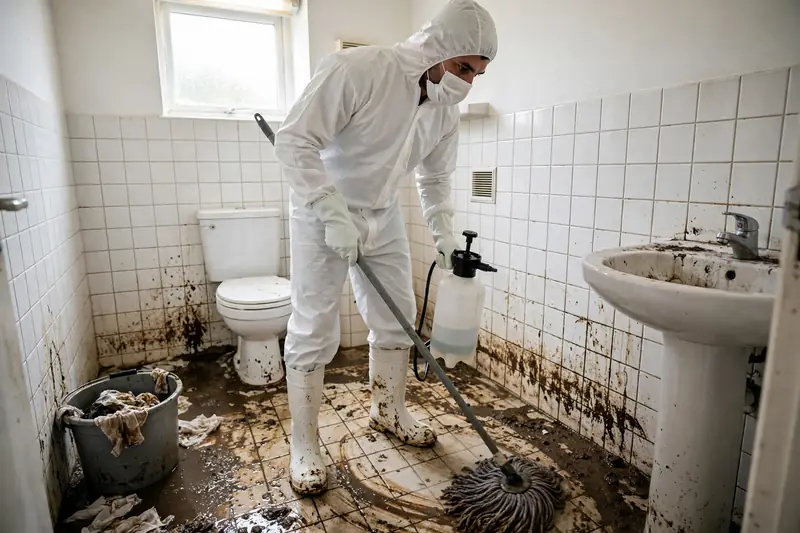
Step 1: Safety and containment. The crew arrives in full personal protective equipment, including respirators, gloves, boots, and protective suits. They establish containment barriers with plastic sheeting to prevent contamination from spreading to clean areas. Air filtration with HEPA filters controls airborne particles during the work. The HVAC system stays off.
Step 2: Extraction. Standing sewage is extracted with professional equipment designed for contaminated water. Extracted wastewater is disposed of properly, through the sanitary sewer system or by a licensed waste hauler. It is never dumped in a yard, a storm drain, or a street.
Step 3: Removal of contaminated porous materials. Every porous material that contacted sewage is removed: drywall, insulation, carpet, carpet padding, baseboards, upholstered furniture, bedding, cardboard, and any other porous material. There are no exceptions. These materials cannot be cleaned or restored. They are bagged, sealed, and disposed of as contaminated waste.
Step 4: Cleaning and disinfection. Hard, nonporous surfaces are cleaned with professional cleaning agents and disinfected. This includes concrete, tile, metal, and sealed wood. The cleaning process removes visible contamination and kills pathogens. Household bleach is not used as a substitute for professional disinfection on porous materials, because it does not penetrate them.
Step 5: Drying. After cleaning and disinfection, the structure is dried with air movers and dehumidifiers to verified dry standards. Drying is verified with moisture meters, not by how surfaces feel. Our structural drying and dehumidification service handles this phase, and our article on how long structural drying takes explains the timelines.
Step 6: Verification and rebuilding. Once the structure is verified dry and clean, rebuilding begins: new drywall, insulation, flooring, and baseboards. Rebuilding should never start before drying and disinfection are complete. Closing a wall over a contaminated or damp cavity traps the problem inside.
Step 7: Documentation. The crew documents the work with photos, moisture readings, and a scope report. That documentation supports your insurance claim and provides a record that the home was restored to a clean, dry condition.
Prevention: Keeping Sewage Where It Belongs
A sewage backup is one of the most preventable plumbing emergencies, because most causes are within the homeowner's control.
Flush only toilet paper. Do not flush wipes, even wipes labeled "flushable." Do not flush feminine hygiene products, paper towels, cotton balls, dental floss, or diapers. Toilet paper is designed to break down in water. Everything else is not, and it accumulates in the sewer line until it blocks.
Never pour grease down drains. Cooking grease solidifies in sewer lines. Wipe grease from pans with a paper towel and dispose of it in the trash. Use a grease container for larger amounts. This single habit prevents a large share of sewer line blockages.
Install drain screens. Screens on sink, shower, and tub drains catch hair, food solids, and debris before they enter the line. Clean them regularly. A two dollar screen prevents a thousand dollar backup.
Schedule sewer line inspections. Have a plumber inspect the sewer line with a camera every 1 to 3 years, or sooner if your home is older or you have mature trees near the lateral. A camera inspection detects root intrusion, cracks, offset joints, grease buildup, and bellies before they cause a backup. Keep a record of past clogs, repairs, and inspection reports to help technicians diagnose recurring issues.
Consider a backwater valve. A backwater valve installed on the main sewer lateral prevents municipal sewer surges from entering your home. It is a mechanical valve that allows water to flow out but closes when water tries to flow back in. It must be inspected and exercised annually to stay functional. If your property sits low in the neighborhood or floods frequently, a backwater valve is worth discussing with your plumber.
Maintain trees near the sewer line. If you have mature trees near the lateral, monitor them. Root intrusion is progressive and silent. A camera inspection every few years catches roots before they block the line. If roots are found, the plumber can recommend removal, treatment, or line repair.
Know your sewer cleanout location. The sewer cleanout is an access point, usually a capped pipe near the house or in the yard, that gives a plumber direct access to the main line. Know where yours is, keep it accessible, and do not bury it under landscaping. During a backup, the cleanout is how the plumber accesses the line quickly.
Frequently Asked Questions
Stop using all water immediately. Do not flush toilets, run sinks or showers, or use appliances. Keep people and pets out of the affected area. Turn off power to the area if you can do it safely from a dry location. Turn off the HVAC system. Then call a plumber to clear the blockage and a professional sewage cleanup team.
No. Sewage is Category 3 black water, and household cleaners are not sufficient. Porous materials that contact sewage must be removed, not cleaned. Sewage cleanup requires professional equipment, protective gear, containment, and disinfection. Do not attempt it yourself, even for a small backup.
Standard policies typically do not cover sewer or drain backup. Many insurers offer a water backup endorsement that adds this coverage for an additional premium. Check your policy for a water backup endorsement. If you do not have one, ask your agent about adding it. See our guide to water damage insurance claims in Arizona for the details.
If multiple homes on your street are backing up at the same time, the problem is likely in the municipal main line. If only your home is affected, the problem is likely in your lateral or your internal plumbing. Contact the city if you suspect a municipal problem, and call a plumber regardless, because your lateral may still need attention.
No. Chemical drain cleaners do not clear deep sewer line blockages. They sit in the blocked line, can splash back when the line is cleared, and create a hazard for the plumber. Do not pour them into a backed up drain.
It depends on the extent of the backup, the area affected, and how much material must be removed. Extraction and removal typically take a day. Cleaning, disinfection, and drying add several more days. Drying is verified with moisture meters before rebuilding begins. Your restoration team can give you a timeline after the initial assessment.
Porous materials that contacted sewage must be removed: drywall, insulation, carpet, carpet padding, baseboards, upholstered furniture, bedding, cardboard, and similar items. Hard, nonporous items can often be cleaned and disinfected. Your restoration team will assess each item and tell you what can be saved and what must be disposed of.
Flush only toilet paper, never pour grease down drains, install drain screens, schedule sewer line camera inspections every 1 to 3 years, maintain trees near the sewer line, and consider a backwater valve if your property is low lying or has flooded before. Keep your sewer cleanout accessible. Prevention is far cheaper than cleanup.
---
Need Help With Water Damage in Chandler?
If you are dealing with this problem in your Chandler home, call RestoreNov at (480) 701-8249 for an assessment. See our Sewage Cleanup and Emergency Water Extraction pages for how the work is handled.