
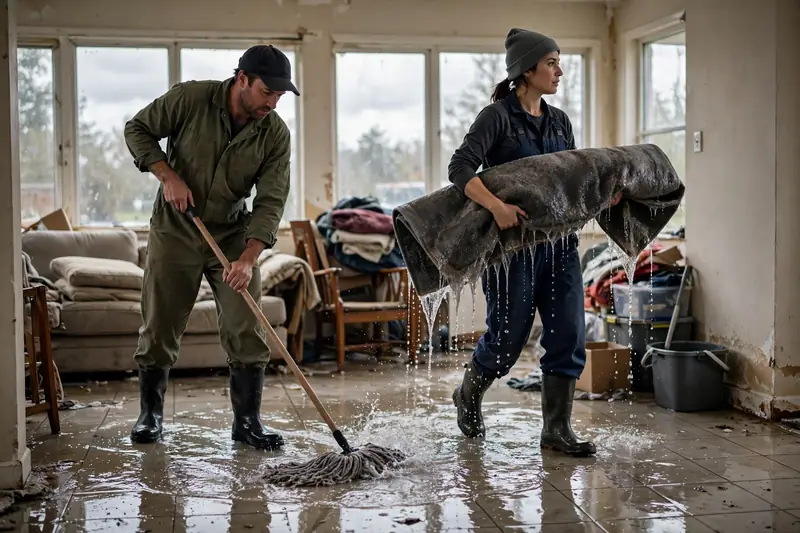
Of all the flood risks inside a home, one of the most underestimated is a pair of rubber hoses most homeowners never look at. Learn when to replace them. Washing machine supply hoses sit under constant water pressure, 24 hours a day, whether the machine is running or not. When one of them fails, it can release hundreds of gallons of water per hour into the laundry room, and from there into walls, flooring, and the rooms below. It is one of the most common causes of catastrophic indoor water damage, and it is almost entirely preventable.
Direct answer: Washing machine hoses fail because rubber under constant pressure ages, dries out, cracks, bulges, and bursts, often without visible warning. A burst supply hose can release hundreds of gallons per hour. Prevention is simple: inspect hoses twice a year, replace rubber hoses every 3 to 5 years even if they look fine, upgrade to braided stainless steel hoses, leave at least 4 inches of clearance behind the machine so hoses do not kink, and turn off the supply valves when you travel. If a hose bursts, shut off the machine valves or the main valve, stay out of water near live electrical equipment, photograph the damage, and call for help. Drying and repair follow the same process as any clean water flood.
This guide explains why hoses fail, the warning signs, the three failure points, what happens in the minutes and hours after a burst, the cleanup and drying process, and the prevention routine that keeps a laundry room from becoming a flood zone.
Why Washing Machine Hoses Are So Dangerous
Three facts combine to make washing machine hoses one of the leading causes of indoor flooding.
First, the hoses are under constant pressure. Unlike a garden hose that is pressurized only when the tap is open, washing machine supply hoses are pressurized all the time, because the supply valves behind the machine are left open. The rubber is stressed around the clock, even at 2 a.m. when everyone is asleep.
Second, the failure is sudden and high volume. A supply hose does not usually drip politely before it bursts. Rubber can look normal on the outside while it weakens from the inside, and then it splits or blows off a fitting. A burst hose at full house pressure can release a very large volume of water very quickly. If the failure happens while you are at work, asleep, or away for the weekend, the water runs until someone finds it.
Third, the location hides the damage. The hoses sit behind the machine, against the wall, where nobody sees them. Water from a burst hose spreads across the laundry floor, wicks into drywall, runs under flooring, and can travel into adjacent rooms and down through the floor assembly. In a two-story home, a laundry room on the upper floor can soak the ceiling and rooms below before anyone notices water downstairs.
Insurance industry guidance has long treated washing machine hose failure as a major preventable loss. The prevention cost is small: a pair of braided hoses and a few minutes of inspection twice a year. The damage cost of a burst hose that runs for hours is orders of magnitude larger.
Why Hoses Fail
Rubber aging
Standard black rubber hoses degrade over time. Heat, pressure cycling, water chemistry, and age all attack the rubber. Chandler laundry rooms can run warm, and heat accelerates rubber aging. The rubber hardens, develops micro-cracks, and loses resiliency. The outside of a rubber hose can look completely normal right up to the point of failure, because the damage often starts on the inside. That is why age is the key risk factor, not visible condition. A rubber hose that is more than five years old should be treated as a replacement item, regardless of how it looks.
Constant pressure
Hoses under constant water pressure lose resiliency as they age and can crack or burst without warning. Every pressure surge in the household system, every water hammer event, and every thermal expansion cycle stresses the hose wall and the fittings. Homes with high water pressure stress hoses faster. A pressure-reducing valve that holds household pressure in a safe range protects hoses, fittings, and appliances alike.
Kinks and tight bends
A hose that is kinked, bent sharply, or pinched behind the machine wears out faster at the bend. Pushing the washer too close to the wall is the most common cause. The hose folds over, the inner wall creases, and the crease becomes the failure point. Maintaining at least 4 inches of clearance between the machine and the wall keeps supply and drain hoses from kinking.
Fitting and washer failure
Hoses fail at the fittings as often as along the hose body. Rubber washers inside the couplings harden, crack, and leak. Fittings corrode, especially in hard water areas. Over-tightening a coupling can crack the fitting. A loose coupling can weep slowly for weeks, soaking the wall and floor behind the machine. Inspect the fittings as carefully as the hose body, and replace washers when hoses are replaced.
Improper installation
Hoses that are cross-threaded, installed without washers, routed with sharp bends, or connected to worn valves fail early. A hose that is too short is stretched tight and stresses the fittings. A hose that is too long loops and kinks. The correct hose length, with gentle bends and proper washers, lasts longer and fails less dramatically.
The Three Failure Points
A washing machine has three hose systems, and each fails differently.
Hot and cold supply hoses
The two supply hoses carry pressurized water from the wall valves to the machine. These are the dangerous ones, because they are pressurized all the time and because a burst releases water at full flow. Supply hose failures produce the classic catastrophic laundry flood: hundreds of gallons, fast, with no warning.
Drain hose
The drain hose carries wastewater from the machine to the standpipe. It is not under constant pressure, but it can fail in its own ways. A drain hose that is not fully inserted into the standpipe can slip out during the high-flow drain cycle and pump water directly onto the floor. A drain hose pushed too far into the standpipe can create a siphon. A cracked or loose drain hose at the pump connection can leak during every drain cycle. A clogged standpipe can overflow. Drain hose failures usually release water only while the machine drains, so the volume is lower than a supply burst, but a drain failure that repeats every load can still soak a floor and wall over weeks.
Internal hoses and pump
Inside the machine, hoses connect the pump, the tub, and the drain. Internal hoses can crack, clamps can loosen, and the pump can leak. Internal leaks often show as water under the machine, water in the base of the cabinet, or a machine that leaks only during certain cycles. Internal leaks are an appliance repair issue, and they still need drying and moisture assessment if water reached flooring or walls.
Warning Signs: What to Look For
Inspect the hoses twice a year, and look for these signs every time:
- Cracks, splits, or surface crazing in the rubber
- Bulges, blisters, or swollen points along the hose, especially near the ends
- Stiffness, brittleness, or a hose that feels hard and inflexible
- Kinks, sharp bends, or flattened sections
- Rust, corrosion, or green mineral deposits at the fittings
- Dampness, drips, or moisture on or around hoses and connections
- Discoloration on the wall or floor behind the machine
- A musty smell in the laundry room that survives cleaning
- Hoses that are more than five years old, or hoses whose age you do not know
Pay close attention to the ends of the hoses near the connections, because that is where stress concentrates and where failure often starts. Pull the machine out a few inches so you can see the full hose run, not just the visible middle section. If you find any of the signs above, replace the hoses promptly. A hose that shows a bulge is already failing, and a bulge can become a burst at any time.
What Happens After a Burst: The First Minutes
A burst hose is an emergency, but it is a manageable one if you act in the right order.
Shut off the water. Close the washing machine supply valves behind the machine if you can reach them safely. If you cannot reach them, or if the valves will not close, shut off the main water valve to the house. Do not wade into standing water to reach a valve if there is any chance that electrical outlets, the machine, or the dryer are live. If you can reach the electrical panel without crossing water, turn off power to the laundry area. If you cannot do that safely, stay out and call for help.
Move furniture, electronics, and valuables out of the wet area if it is safe to do so. Place towels or containers to limit spread. Do not use a household vacuum on standing water.
Photograph and video everything before you change anything. Capture wide shots of the laundry room and every affected room, close-ups of the failed hose and fittings, water levels, and damaged materials. Write down when you discovered the flood and what you did. This record supports the insurance claim and the restoration scope.
Call for help. Call a plumber if a valve needs repair or replacement. Call a restoration team for extraction and drying. Extraction and drying can begin while plumbing repairs are scheduled, and early action limits both damage and cost.
Cleanup, Drying, and Repair After a Washer Flood
A washing machine supply burst is clean water, Category 1, if the water came from a supply hose. A drain hose failure involves gray water, Category 2, because it carries detergent, dirt, and microbes from the wash cycle. The category affects the cleaning and sanitizing steps, but the drying process is similar.
Extraction
Standing water is extracted with truck-mounted or portable extractors and wet vacuums. Every gallon removed in this step is a gallon that does not have to be dried out of walls and floors. Contents are moved, and wet rugs, clothing, and stored items are set aside for drying or disposal.
Moisture mapping
Technicians take moisture readings across floors, walls, and baseboards with pin and pinless meters, and thermal imaging maps the wet zone. The moisture map is essential after a washer flood, because water runs under flooring, behind baseboards, and into wall cavities that look dry from the outside. The map sets the drying plan and the scope of any material removal.
Drying
Commercial air movers and low-grain refrigerant dehumidifiers dry the structure. Baseboards and shoe molding may be removed to allow airflow at the wall line and to check for moisture behind the trim. Drywall that stayed wet may need a flood cut, which is a controlled removal of the lower section of drywall to expose the wall cavity for drying. Insulation that stayed wet may need removal. Technicians take daily moisture readings until materials reach their dry standard. Drying typically takes 3 to 5 days for a straightforward laundry flood, and longer if water reached multiple rooms or the subfloor.
Cleaning and sanitizing
After a supply hose burst, affected surfaces are cleaned and treated with antimicrobial products where appropriate. After a drain hose failure, cleaning and sanitizing are more thorough, because gray water carries contaminants. Porous materials that contacted gray water, such as carpet pad, may need removal.
Repair and rebuild
Once the structure is dry, damaged drywall, baseboards, flooring, and paint are repaired or replaced. The laundry valves and hoses are replaced as part of the source repair, not just the cosmetic rebuild. A rebuild that leaves the original worn valves and hoses in place invites a repeat flood.
Prevention: The Laundry Room Routine
Prevention is a short routine, done twice a year, plus two habits that cost nothing.
Replace hoses on a schedule
Replace standard rubber hoses every 3 to 5 years, even if they look fine. Hoses weaken from the inside before damage is visible on the outside. Write the install date on the new hose with a marker, so you always know the age. When you replace hoses, replace the washers at both ends too, and check the valves for leaks and smooth operation.
Upgrade to braided stainless steel hoses
Braided stainless steel hoses are the most popular upgrade. The metal braid adds strength and helps resist bursting. They are inexpensive, widely available, and they fit the same connections as rubber hoses. No hose lasts forever, and the inner tube of a braided hose still ages, so braided hoses also need inspection and scheduled replacement, but they are more durable than basic rubber hoses and they fail less catastrophically.
Consider an automatic shutoff valve
An automatic shutoff valve or a leak detection system with a sensor can close the supply when it detects water on the floor or abnormal flow. Some valves are mechanical and need no power. Others are electronic and send a phone alert. If your laundry room sits on an upper floor, or if you travel often, an automatic shutoff is worth considering, because an upper-floor laundry flood damages the rooms below as well as the laundry room.
Leave clearance behind the machine
Maintain at least 4 inches of clearance between the machine and the wall so supply and drain hoses do not kink. Do not push the machine back until the hoses sit in gentle curves with no sharp bends. Check the clearance every time you move the machine for cleaning.
Turn off the valves when you travel
Turn off the washing machine supply valves when you leave for an extended period. It takes ten seconds and it removes the pressure that causes a burst. Many homeowners also close the valves after every load, which is the safest habit of all. If the valves are stiff or corroded, have a plumber replace them with quarter-turn ball valves that are easy to operate.
Keep the floor drain clear
If the laundry area has a floor drain, keep it free of lint and debris so it can carry away a small leak instead of letting water spread. A floor drain does not handle a full burst, but it helps with a slow leak and with the cleanup after any event.
Check water pressure
High household water pressure stresses hoses, fittings, and appliances. A pressure-reducing valve holds pressure in a safe range. A plumber can test your pressure during routine service, and the test takes only a few minutes.
Chandler-Specific Notes
Chandler laundry rooms face a few local wrinkles. Many homes have the laundry room on the upper floor or in a central location, which means a burst hose can damage the rooms below as well as the laundry room itself. Hard water accelerates corrosion at fittings and shortens the life of rubber washers, so fitting inspections matter as much as hose inspections. Warm laundry rooms accelerate rubber aging. Homes with tile or concrete floors in the laundry room may hide a slow leak longer, because tile does not show dampness the way drywall or carpet does, and water can run under tile and into adjacent rooms before anyone notices. A water sensor on the laundry floor is especially useful in a tile laundry room.
Snowbird and travel patterns matter too. A home that sits empty for weeks or months while the owners are away is at high risk from a burst hose, because nobody is there to find the water. If you leave for an extended period, shut off the main water valve, or at minimum shut off the washing machine valves and the water heater supply. The companion post on snowbird prevention covers the full departure checklist.
FAQ
Many manufacturers and insurers recommend replacing rubber hoses every 3 to 5 years, even if they look fine, because rubber weakens from the inside. Braided stainless steel hoses last longer but still need inspection and scheduled replacement. Write the install date on the hose with a marker.
No hose is burst-proof. Braided stainless steel hoses are more durable than basic rubber hoses and they resist bursting better, but the inner tube still ages, and fittings can still fail. Treat braided hoses as a strong upgrade, not a permanent fix, and keep inspecting them.
Closing the valves after every load is the safest habit, because it removes the constant pressure that causes bursts. At minimum, close the valves whenever you leave the house for more than a day. If the valves are stiff or hard to reach, have a plumber replace them with quarter-turn ball valves.
Replace the hose promptly. A bulge means the hose wall is already weakening and the hose can burst at any time. Do not wait for the next inspection cycle. Turn off the valves to that machine until the hose is replaced.
A supply hose burst is clean water, Category 1, because the water came from the supply line. A drain hose failure is gray water, Category 2, because it carries detergent, dirt, and microbes. The category affects cleaning and sanitizing, but both need prompt drying.
Coverage depends on your policy, the cause, and whether the damage was sudden or the result of a long-term leak that went unrepaired. A sudden burst is generally treated differently from a slow leak that soaked a wall for months. Document the timing, keep receipts, and confirm the details with your carrier. This post is general information, not insurance or legal advice.
Need Help With Water Damage in Chandler?
If you are dealing with this problem in your Chandler home, call RestoreNov at (480) 701-8249 for an assessment. See our Emergency Water Extraction and Carpet & Flooring Drying pages for how the work is handled.